


Things to Do in Sedona with Kids: Family Adventures for Every Age

By: Adam Jerold Cansino | October 23, 2026
Sedona, Arizona, is an exciting destination for parents traveling with children of different ages. Towering sandstone formations, accessible nature walks, scenic drives, and refreshing creekside experiences let you enjoy the outdoors without planning an exhausting itinerary.
The best things to do in Sedona with kids combine memorable outdoor adventures with memorable experiences. It helps to set realistic expectations about walking distances, weather, and energy levels.
Younger children may enjoy spotting unusual rock formations or playing at a local park, while older children can tackle longer walks, guided excursions, and more adventurous terrain.
Families can also balance sightseeing with quieter afternoons at restaurants and in recreational spaces.
Planning a Family Trip to Sedona
- Best easy walking experience: Bell Rock Pathway for recognizable sandstone scenery and flexible distances.
- Best summer attraction: Slide Rock State Park for supervised creekside recreation when conditions permit.
- Best educational outing: Red Rock State Park for nature interpretation and wildlife observation.
- Best scenic stop: Chapel of the Holy Cross for impressive architecture and surrounding formations.
- Best guided adventure: A professionally operated off-road excursion suited to children’s ages.
- Best time to explore: Early mornings during warmer months, especially when hiking.
- Best planning strategy: Schedule one major outdoor experience each morning and leave afternoons flexible.
1. Explore Easy Hiking Trails for the Whole Family
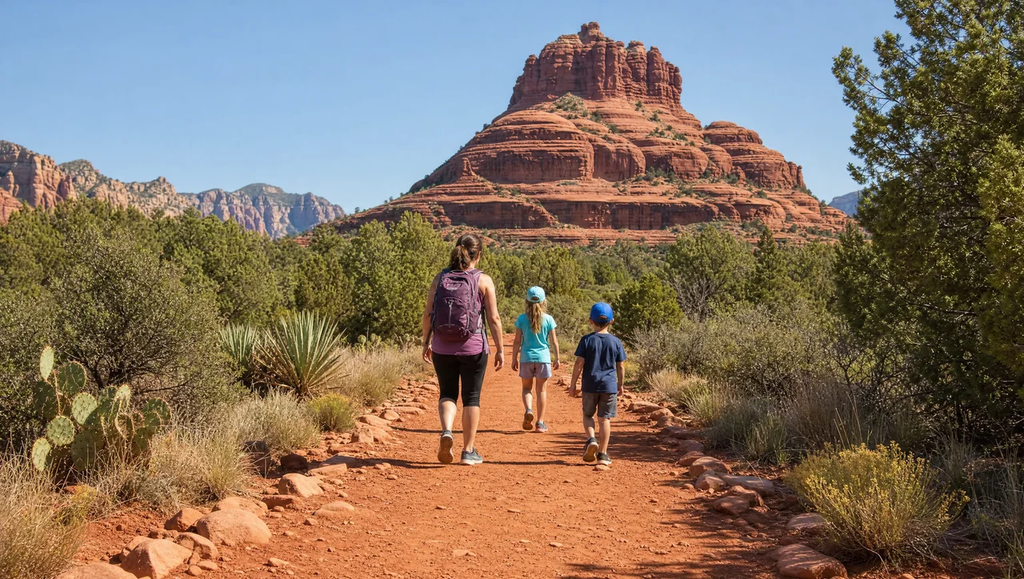
Sedona’s greatest attraction is its remarkable network of hiking trail options. Fortunately, you don’t always need difficult hikes or hours of climbing to enjoy the landscape and fit family-friendly outdoor activities into your itinerary.
Several easy hiking trails allow children to experience Arizona’s distinctive desert environment at a manageable pace. These routes offer scenic views, opportunities to observe desert plants, and plenty of natural discoveries along the way.
Bell Rock Pathway: An Easy Trail With Scenic Views
Bell Rock Pathway is an excellent introduction to the area’s sandstone landscape.
The relatively gentle route lets visitors photograph Bell Rock and neighboring Courthouse Butte without climbing either formation.
Families can walk a short section, take photographs, and return whenever younger children need a break.
Why families enjoy it:
- Flexible walking distances for different ability levels.
- Open views of recognizable sandstone formations.
- Opportunities to observe native desert vegetation.
- Relatively straightforward terrain along the main pathway.
Best for: Preschoolers, school-age children, and first-time desert hikers.
Stick to established paths rather than attempting steep sandstone scrambles with inexperienced children. Check trailhead parking requirements and arrive early during busy travel periods.
Fay Canyon: A Shaded Canyon Experience
Fay Canyon’s 2.4-mile out-and-back route follows a canyon bordered by towering cliffs and vegetation, with occasional shaded sections.
Although the main route is generally manageable for active children, uneven ground and rocky areas mean it may not suit every young walker.
Best for: School-age children comfortable walking several miles.
The main route is preferable to steeper side paths. The optional scramble near the canyon’s end is not necessary to enjoy the scenery.
West Fork: A Creekside Hiking Experience
Located in Oak Creek Canyon, West Fork is known for its towering canyon walls, leafy vegetation, and seasonal changes.
The route includes multiple creek crossings, which can make the experience especially interesting for older children.
However, crossings may involve slippery stones, cold conditions, or higher flows after rainfall.
Best for: Older children with good balance and previous walking experience.
A short out-and-back visit is a reasonable alternative to completing the full route. The changing scenery, towering cliffs, and shaded canyon environment make this a rewarding hike for nature-loving visitors.
For a more detailed comparison of distances, difficulty, and scenery, see Best Hikes in Sedona: 12 Trails for Every Experience Level.
2. Visit Slide Rock State Park for Creekside Fun
Located in Oak Creek Canyon, this popular Arizona state park features a natural sandstone channel where flowing creek currents have created smooth, sloping surfaces.
Visitors come to enjoy swimming areas, creekside scenery, and the historic orchard setting.
For children, the experience can be exciting, but conditions require careful attention.
Important safety considerations:
- Natural rock surfaces become extremely slippery when wet.
- Creek depth, current, and temperature can vary.
- Not every section is appropriate for inexperienced swimmers.
- Children need continuous, close adult supervision.
- Water shoes with good traction help, but they cannot eliminate slipping hazards.
- Quality advisories, weather conditions, or park restrictions may affect swimming.
Parents should never assume that a naturally formed sliding area is supervised like a commercial swimming pool.
A young child may enjoy observing the creek and spending time in permitted shoreline areas rather than using the natural slide.
Check Arizona State Parks for current entrance information, swimming advisories, and operating conditions before visiting.
3. Discover the Chapel of the Holy Cross
This famous architectural landmark offers a memorable sightseeing experience without requiring a lengthy wilderness excursion.
Built directly into the surrounding sandstone landscape, the structure offers majestic views of Sedona’s formations.
Its distinctive design also introduces children to how architecture relates to natural landscapes.
What makes it suitable for families:
- An opportunity to enjoy impressive surroundings without a long trek.
- Interesting architecture that encourages curiosity.
- Convenient photography opportunities.
- A relatively short visit that fits between other activities.
The approach includes an uphill walk, and parking is limited. Families with young children or mobility needs should plan accordingly.
Visitors should also respect the building’s religious purpose and keep it quiet inside.
Confirm current visiting hours and access arrangements before arrival.
4. Experience Outdoor Adventures on Guided Jeep Tours
Guided off-road excursions offer another way to see the rugged landscape without completing a demanding walk.
Depending on the route, passengers may travel over uneven desert terrain, observe distinctive formations, and learn about local geology and natural history.
These experiences are particularly appealing to older children who enjoy vehicles, exploration, and dramatic scenery.
However, not every excursion suits every passenger.
Before choosing an excursion, consider:
- Minimum passenger age and any height restrictions.
- Car-seat or booster-seat requirements.
- Route difficulty and how rough the ride may be.
- Duration and available comfort breaks.
- Whether the experience suits passengers prone to motion sickness.
Popular options include guided sightseeing experiences from Pink Jeep and other established operators. Parents can also compare providers such as Safari Jeep for route preferences, passenger restrictions, and available departures.
Gentler sightseeing routes may suit younger children better than particularly rugged terrain.
Families comparing options can use Sedona Jeep Tours: Best Red Rock Adventures and Tour Options to understand the differences between sightseeing excursions and more demanding off-road experiences.
For children who prefer a smoother ride, a narrated trolley or sightseeing vehicle may provide a more comfortable introduction to the landscape.
5. Explore Red Rock State Park and Learn About Nature
This protected natural area combines peaceful surroundings with opportunities to learn about plants, wildlife, habitats, and regional history.
Interpretive programs and guided nature walks can make the experience more engaging for curious school-age children.
Instead of focusing on covering as much distance as possible, families can turn a short outing into a nature-observation activity.
Ideas for young explorers:
- Look for birds in trees and along the creek corridor.
- Compare different sandstone shapes and colors.
- Identify desert plants using visitor-center information.
- Discuss how plants and animals adapt to dry environments.
- Take photographs of natural features without disturbing them.
Swimming and wading are prohibited at this particular state park to protect its sensitive habitat.
Follow designated paths and check program schedules before arrival.
6. Enjoy Family-Friendly Parks and Playgrounds
Not every outing needs to involve a major attraction.
Local recreational parks offer space to relax between more structured activities, especially when younger children need time to run, play, or enjoy familiar routines.
Posse Grounds Park
Posse Grounds Park is one of the most practical recreational stops for families.
The park offers playgrounds, sports areas, picnic spots, and views of the surrounding landscape.
It works especially well when kids need a break from sightseeing or parents want a simple afternoon.
Sunset Park
Sunset Park is another option for open-air recreation.
Its playground and seasonal splash-pad facilities can appeal to younger visitors, but confirm operating schedules and availability in advance.
These parks can also provide a useful alternative when hiking conditions are unfavorable.
For parents traveling with a baby or toddler, a playground visit can be easier to manage than a remote nature excursion. Accessible recreational spaces make it easier to fit in shorter outings around feeding times, naps, and changing routines.
7. Take a Scenic Drive Through Oak Creek Canyon
A scenic drive is a great option when younger travelers aren’t ready for another long walk.
State Route 89A connects Sedona with the higher elevations around Oak Creek Canyon, passing forested slopes, dramatic cliffs, and changing vegetation.
The contrast between desert formations and greener canyon environments gives children an opportunity to notice how landscapes change over relatively short distances.
Planning tips:
- Choose a few designated viewpoints rather than making frequent unscheduled stops.
- Allow extra travel time on winding sections.
- Bring snacks and drinks for passengers.
- Use established parking areas instead of stopping along narrow shoulders.
- Check road and weather conditions during winter and stormy periods.
For many families, the drive itself becomes an enjoyable part of the experience.
This is also one of the most kid-friendly sightseeing options for visitors who prefer comfortable vehicle access over longer walks.
8. Hike to Spectacular Vistas With Older Children
Older children and teenagers who already enjoy hiking may be ready for more challenging terrain.
Sedona offers many stunning moderate routes, but some popular viewpoints involve steep inclines, exposed ledges, and technical scrambling.
Boynton Canyon is one option for active families seeking a longer walk through scenic sandstone.
The full route is much more demanding than a short nature walk, so parents should consider fitness, daylight, and changing weather.
Iconic formations such as Devil’s Bridge also attract adventurous visitors, but the exposed formation and approach terrain deserve serious consideration. This is not an appropriate destination for children who cannot reliably follow safety instructions near steep drop-offs.
Before attempting longer routes:
- Review official route descriptions and current access conditions.
- Consider cumulative walking distance rather than only elevation gain.
- Choose an achievable turnaround point.
- Avoid exposed rock surfaces during storms.
- Never pressure children to finish when they become tired.
The goal is to enjoy the landscape safely, not to reach every famous viewpoint.
9. Browse Art Galleries and Local Shopping Areas
A change of pace can make a family vacation more enjoyable.
Tlaquepaque Arts & Shopping Village offers a distinctive setting with courtyards, galleries, specialty shops, and places to eat.
Younger visitors may enjoy its architecture, fountains, and colorful displays, while older children may appreciate handmade objects and local craftsmanship.
Uptown Sedona also offers chances to browse souvenir shops, sample sweet treats, and take a break from outdoor activities.
A relaxed afternoon might include:
- Visiting an art gallery with artwork that interests the children.
- Finding a small souvenir inspired by Arizona’s landscape.
- Enjoying a snack or ice cream.
- Having an early meal at a casual restaurant.
- Returning to accommodations before everyone becomes overtired.
A slower afternoon can help maintain enthusiasm for the following morning’s outing.
10. Try Stargazing After Sunset
Sedona’s dark night skies make stargazing a memorable option for older children.
On clear evenings, visitors can see bright stars and constellations, and guided astronomy experiences may offer telescope viewing and explanations of the night sky.
Even a short outdoor session can excite younger children.
Choose a safe, designated location away from traffic and steep terrain, and bring warm clothing. Temperatures can drop considerably after sunset, even in warmer months.
Best for: School-age children, teenagers, and anyone interested in astronomy.
Families who prefer an organized activity should compare activity durations and age suitability before booking.
This is among the more unusual kid-friendly activities available after sunset and can introduce young travelers to basic astronomy in a memorable setting.
Best Adventures by Age Group
Choosing activities according to children’s abilities often leads to a more enjoyable trip than following a crowded sightseeing checklist.
| Age group | Recommended experiences | Planning considerations |
| Babies and toddlers | Short viewpoints, scenic drives, playground visits | Shade, naps, suitable carriers, and frequent breaks |
| Ages 4–7 | Short Bell Rock walks, parks, sightseeing landmarks | Flexible distances and close supervision |
| Ages 8–12 | Canyon walks, nature programs, suitable creekside recreation | Walking endurance, swimming ability, and weather |
| Ages 13–17 | Longer canyon walks, appropriate guided off-road experiences, astronomy outings | Terrain exposure, operator restrictions, and fitness |
These are general suggestions rather than fixed age requirements. Individual interests, confidence, physical abilities, and operator rules should guide each decision.
Choosing Outdoor Activities for Different Abilities
Children of the same age may have very different comfort levels with physical activity, heights, and unfamiliar environments.
When planning an outing, parents should consider walking experience, coordination, confidence, and the child’s willingness to follow instructions.
An easy route can still challenge a preschooler, while a confident teenager may enjoy more demanding terrain.
For first-time visitors, combining a short morning exploration with relaxed afternoon sightseeing is often more enjoyable than planning multiple strenuous experiences.
When Is the Best Time to Visit With Children?
You can explore Sedona year-round, but temperatures and seasonal conditions can change which activities are appropriate.
| Season | Typical conditions | Family planning approach |
| Spring | Often pleasant daytime temperatures, with variable winds and cooler mornings | Favor top-tier morning walks and layered clothing |
| Summer | Hot afternoons, strong sun, and potential monsoon storms | Start very early and avoid strenuous midday activity |
| Fall | Often comfortable walking conditions, with cooler evenings | Combine sightseeing with daytime walks |
| Winter | Cool days, cold mornings, and occasional icy or snowy conditions | Choose accessible routes and monitor changing conditions |
Summer Heat and Monsoon Safety
Summer requires particular attention because desert conditions can be more demanding than visitors expect.
The National Weather Service identifies June 15 through September 30 as northern Arizona’s official monsoon season, when thunderstorms and flash flooding become important considerations.
Families should:
- Begin hikes early, before temperatures rise.
- Carry plenty of drinking water and salty snacks.
- Wear sun-protective clothing, hats, and sunscreen.
- Avoid exposed routes during extreme heat.
- Cancel creek visits when flooding is possible.
- Seek proper shelter immediately when thunderstorms approach.
- Turn around if anyone experiences dizziness, unusual fatigue, headache, or nausea.
A shaded location does not automatically eliminate heat risks, particularly for small children.
Winter and Shoulder-Season Precautions
Late fall, winter, and early spring can bring cold mornings, rapidly changing conditions, and occasional ice at higher or shaded locations.
Pack layers, check forecasts, and avoid slippery rock surfaces.
Across all seasons, carry navigation information because mobile reception may be unreliable in remote areas.
A Simple Two-Day Itinerary for Families
A two-day plan provides enough variety to enjoy several highlights while allowing room for rest.
Day 1: Easy Walking and Sightseeing
Morning: Begin with a short Bell Rock Pathway outing before the busiest part of the day.
Late morning: Visit the famous hillside architectural landmark for panoramic scenery.
Afternoon: Enjoy lunch, browse Tlaquepaque, or spend time at a recreational park.
Evening: Have dinner and enjoy a short stargazing session if conditions are suitable.
Day 2: Choose Your Main Adventure
Morning: Visit the natural swimming area when creek conditions permit, or choose the protected nature preserve for a quieter educational experience.
Afternoon: Schedule a suitable guided vehicle excursion, take a scenic drive, or simply relax.
Evening: Enjoy a casual meal and a peaceful final evening.
For a wider selection of regional attractions and alternative experiences, the parent guide, Things to Do in Sedona, AZ: 25 Red Rock Adventures and Experiences, covers additional ways to explore the destination.
Where to Stay for a Family Vacation
Choosing the right accommodations can make a big difference when traveling with children.
After a morning of sightseeing, a comfortable home base gives everyone space to recharge without immediately heading back out.
Vacation homes are especially practical for households that value separate bedrooms, shared living areas, and flexibility around meals and daily routines.
When comparing properties, consider:
- Sleeping arrangements and maximum occupancy.
- Kitchen facilities for preparing simple meals.
- Laundry availability for longer stays.
- Parking and driving access to planned attractions.
- Outdoor spaces and any child-safety considerations.
- Property-specific amenities and house rules.
The luxury vacation rentals in Sedona available through Paradiso Homes provide a starting point for comparing accommodations, layouts, and amenities suitable for different travel groups.
Final Thoughts
A memorable family friendly vacation in Sedona doesn’t have to revolve around completing the longest route or visiting every famous landmark.
The most rewarding experiences often come from combining manageable nature walks, scenic landmarks, guided activities, and time to relax together.
Younger children can explore the sandstone landscape on short outings, while teenagers may enjoy longer explorations and more challenging experiences.
With thoughtful scheduling, suitable accommodations, and careful attention to weather and terrain, Sedona offers a rewarding setting for family memories throughout the year.
Frequently Asked Questions
Is Sedona a good destination for families with young children?
Yes. Sedona offers scenic viewpoints, short nature walks, parks, and sightseeing experiences that do not require advanced hiking experience. Families with very young children should focus on flexible schedules, shaded breaks, and manageable walking distances.
What are the easiest hikes for children?
Bell Rock Pathway is a popular starting point because visitors can choose relatively short sections with rewarding scenery. Other gentle routes may suit active school-age children, although longer distances and uneven surfaces require additional preparation.
Is swimming at the natural sandstone creek safe for young children?
Creek recreation can be enjoyable, but natural conditions involve meaningful risks, including slippery sandstone, variable currents, and changing depths. Parents should provide constant, close supervision and decide whether each child can participate safely. Always check swimming conditions and park advisories first.
Can you visit Sedona without doing strenuous hikes?
Absolutely. Families can enjoy sightseeing drives, local parks, galleries, historic attractions, and professionally guided excursions without committing to challenging routes.
Are guided off-road excursions suitable for small children?
Some operators offer relatively gentle sightseeing experiences, while others use routes with significant bumps and steep terrain. Age restrictions, child-restraint requirements, and route intensity vary, so parents should confirm suitability directly with the operator before booking.
How many days should a family spend in the area?
Two to three days can provide a satisfying introduction. A two-day visit works well for easy sightseeing and one major attraction, while an extra day gives children more rest time and flexibility for weather.
What should parents pack for a family hiking trip?
Essentials include sufficient drinking supplies, snacks, sunscreen, hats, supportive footwear, a basic first-aid kit, weather-appropriate layers, and offline navigation information. Families with younger children may also need a suitable child carrier and extra supplies for unexpected delays.
What are the best activities for kids who don’t enjoy hiking?
Playgrounds, scenic drives, guided sightseeing, local galleries, and short nature programs are excellent alternatives. Parents can mix indoor and outdoor experiences to keep the schedule interesting without requiring long walks.