


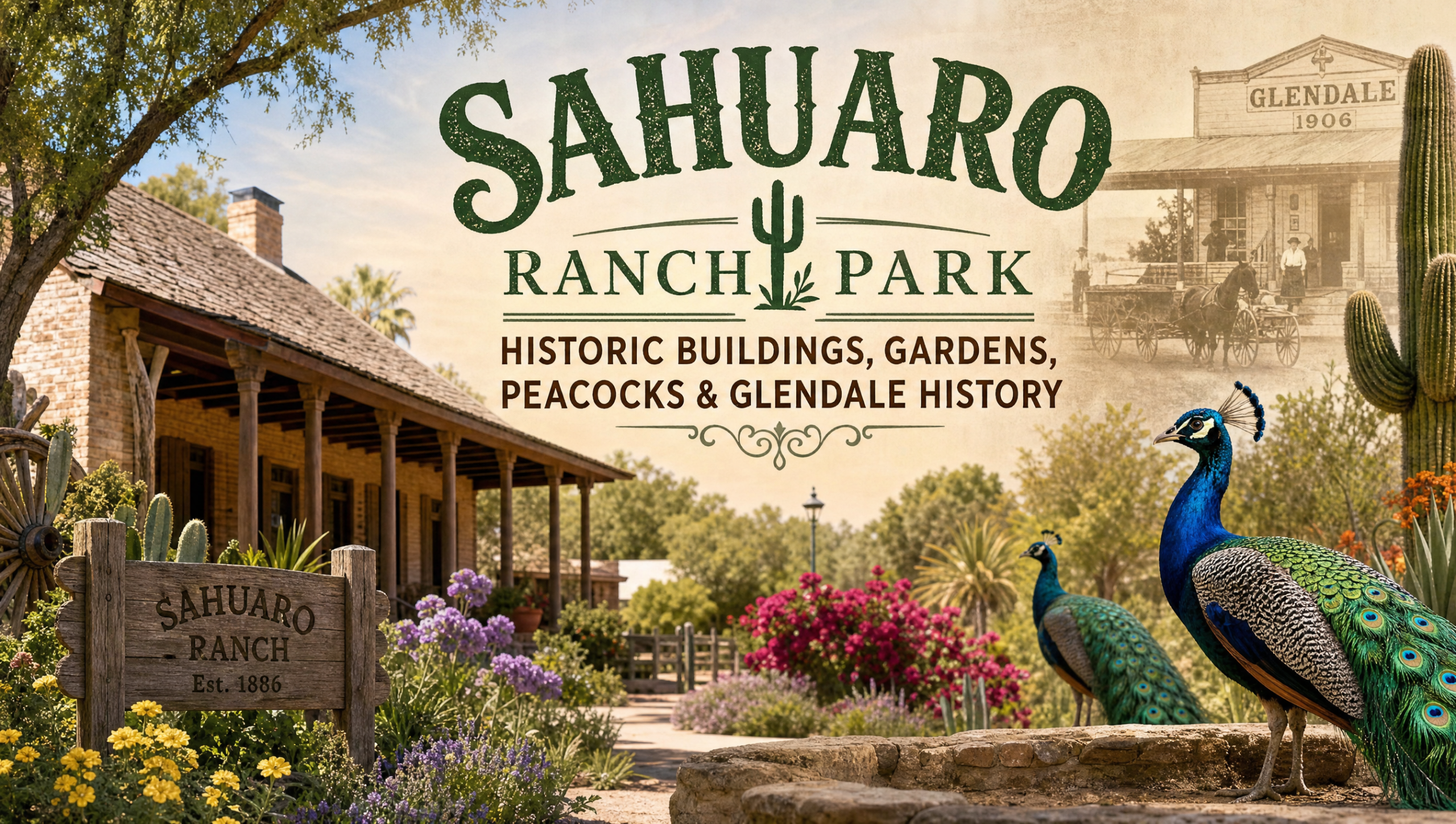
Sahuaro Ranch Park: Historic Buildings, Gardens, Peacocks & Glendale History
By: Adam Jerold Cansino | September 4, 2026
Sahuaro Ranch Park offers a rare look at the agricultural roots of Glendale through preserved architecture, shaded landscapes, colorful peacocks, and more than a century of local history. Established in the late 1800s, the property gives visitors a quieter alternative to the area’s stadiums, shopping districts, and entertainment venues.
The site is especially appealing for travelers who enjoy heritage attractions, relaxed walks, and places with strong local character. You can explore old structures, admire mature palms and landscaped areas, and learn how farming helped shape this part of the Valley. If you are planning a broader itinerary, our things to do in Glendale article can help you connect this stop with nearby attractions.
A Historic Ranch and Glendale’s Agricultural Past
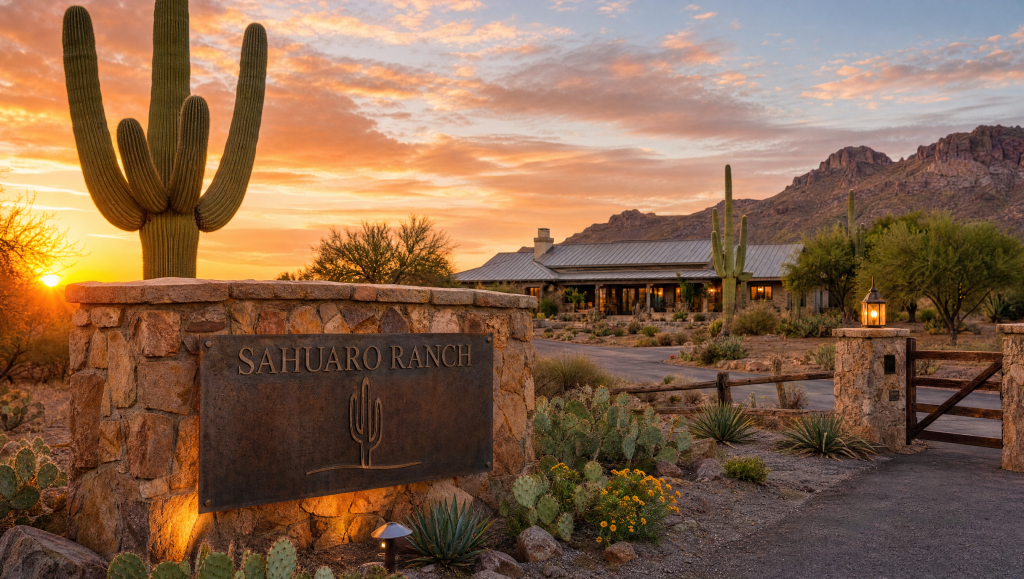
William Henry Bartlett established Sahuaro Ranch in 1886 after acquiring land under the Desert Land Act. The operation developed into a productive agricultural property with fruit, figs, grapes, alfalfa, livestock, and other crops. Irrigation played an important role in making the surrounding desert suitable for farming, and the property became part of the early agricultural story of the West Valley near Phoenix.
Over the following years, residences, work areas, and support structures were added. The Adobe House, believed to date to 1887, is the oldest surviving structure on the property, while additional facilities followed as the operation expanded. A historical ranch like this helps visitors understand how much labor, water management, and infrastructure were required to establish a successful agricultural enterprise in central Arizona.
By the 20th century, surrounding development had changed dramatically. The city eventually acquired the remaining portion of the property and preserved an important core for public use. Part of the site was added to the National Register of Historic Places in 1980, helping protect a significant piece of local heritage.
Today, the surviving ranch buildings and agricultural features make it possible to picture the property as a working enterprise rather than simply a collection of old structures. That sense of continuity is one of the biggest reasons the site stands out among heritage attractions in the region.
The Main House, Gardens, and Peacocks
Architecture is only part of the appeal. The grounds include mature palms, open lawns, orchards, and planted areas that create a surprisingly green setting in the desert. A rose garden adds seasonal color, while the combination of older architecture and vegetation provides plenty of opportunities for casual photography.
The free-roaming peacocks are among the most memorable sights. Visitors regularly report seeing peafowl wandering near the preserved structures and surrounding landscaped areas, often close enough to appreciate their bright plumage and distinctive calls. Other birds and occasional rabbits may also appear during a walk.
Interpretive signs help explain how the property changed over time and what different structures were used for. Even when interior access is limited, there is still plenty to see outdoors. The combination of architecture, greenery, agricultural equipment, and wildlife makes the experience feel more like an open-air heritage attraction than a traditional museum.
For families, the open setting can make local history easier to enjoy at a comfortable pace. Children can move between points of interest without being confined to indoor galleries, while adults can spend more time reading signs, viewing architectural details, and imagining what daily life was like here generations ago.
Planning Your Visit to Sahuaro
The property is located at 9802 N. 59th Avenue in Glendale, Arizona. Because access to interiors and organized visits can change, checking current information before arrival is a good idea. The Glendale Arizona Historical Society states that tours of the principal residence are by appointment only, and group arrangements may also be available.
A visit works well as a one- to two-hour stop, though history enthusiasts may want more time. Comfortable walking shoes are useful, and morning or late-afternoon visits can be more pleasant during warmer months. Visitors primarily interested in the outdoor scenery can still enjoy the property without a formal tour.
This attraction also pairs easily with other parts of a Glendale getaway. You can spend the morning exploring local heritage, then head to Westgate, attend a sporting event, enjoy a meal, or visit another outdoor destination later in the day.
For travelers staying several nights, choosing accommodations nearby can make it easier to build a flexible itinerary. Browse Glendale luxury vacation rentals for spacious accommodations and convenient home bases near the area’s major attractions.
Whether you are interested in Arizona’s agricultural past, looking for an easy family outing, or simply want somewhere scenic to stroll, this destination adds a relaxed and distinctive experience to a Glendale itinerary.
Frequently Asked Questions
Why is this site important to local history?
It preserves part of an agricultural property established in the late 19th century and helps explain how farming, irrigation, and early settlement contributed to the area’s development. Part of the property was listed on the National Register of Historic Places in 1980.
What can visitors see here?
Visitors can explore preserved residences, agricultural structures, mature landscaping, farm equipment, open spaces, and roaming peacocks. The setting combines local history, nature, and architecture in one easy stop.
Can you go inside the preserved homes?
Interior access depends on current schedules and availability. The organization responsible for tours advises that visits to the principal residence require advance arrangements, so it is best to confirm details before arriving.
Are there really peacocks roaming the property?
Yes. Free-roaming peafowl are one of the destination’s best-known features and are frequently seen around the landscaped areas and preserved structures. As with any wildlife, visitors should enjoy them from a respectful distance.
How much time should you spend here?
About 1 to 2 hours is enough for many visitors to walk the grounds, read interpretive displays, take photos, and enjoy the scenery. Travelers with a deeper interest in Arizona history may want to allow extra time.