


Museums in Glendale, AZ: Glendale Arizona Historical Society, Local Culture & Places Worth Visiting
By: Adam Jerold Cansino | September 10, 2026
Glendale has more cultural depth than many travelers expect. Beyond sports venues, shopping districts, and desert recreation, preserved ranches, specialty collections, and public exhibits help explain how the West Valley developed. These museums can add a quieter, more educational layer to a trip without requiring an entire day indoors.
For a broader itinerary, pair these stops with things to do in Glendale, Arizona, to create a useful mix of heritage, food, outdoor time, and entertainment. The best approach is to choose two or three places that fit your group rather than rushing between every attraction.

Why Local Culture Belongs in Your Itinerary
A culture-focused day gives visitors a stronger sense of place. Historic properties show how irrigation, farming, transportation, and civic institutions shaped the Valley, while specialty collections reveal details that are easy to miss when a trip revolves only around modern attractions.
This type of itinerary also works well during the hottest part of the afternoon or when a group wants a change from hiking. Couples may enjoy architecture and local stories, families can choose vehicle-focused stops, and multi-generational groups can build a day that does not depend on strenuous activity.
Sahuaro Ranch: Start With an Early Ranch Landmark
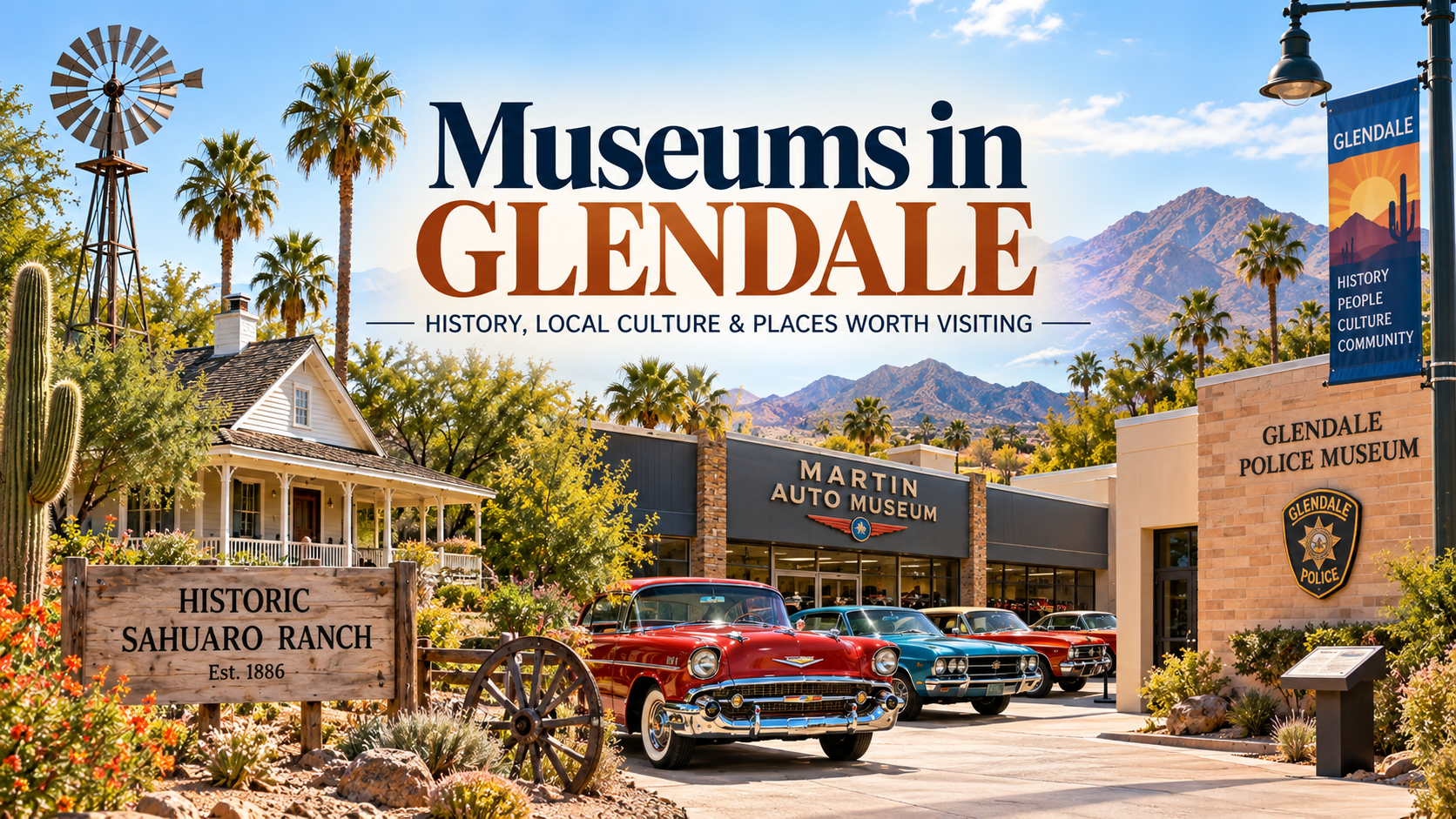
Historic Sahuaro Ranch is one of the strongest places to begin. The 17-acre site preserves older buildings, a rose garden, barnyard areas, and orchards, and it is listed on the National Register of Historic Places. City information also notes exhibits and guided-tour opportunities tied to early settlement and irrigation in the Valley.
The grounds are especially appealing for travelers who prefer an open-air heritage experience rather than a traditional gallery. You can move between architecture, gardens, and agricultural features while seeing how people adapted the desert landscape for daily life. Admission to the historic area is generally free except during certain special events.
Glendale Police Museum: See More Than a Century of Police History
The city’s police department maintains a compact public display inside the Public Safety Building. The Glendale Police Museum preserves more than 100 years of department memorabilia, documenting how local law enforcement changed as the community grew. The second-floor display also recognizes officers who served in branches of the United States military.
This is a shorter stop than most large cultural attractions, which makes it easy to combine with downtown sightseeing or another heritage property. The city currently lists weekday public hours, but it’s wise to check official information before visiting because access policies inside government buildings can change.
Martin Auto Museum: Explore Classic Cars and Automotive Design
At 4320 W. Thunderbird Road in Glendale, AZ, the Martin Auto Museum presents more than 200 vehicles covering over a century of automotive design. The nonprofit collection ranges from early automobiles to American muscle, customs, hot rods, and imports, with memorabilia and signage adding context to the cars on display.
It works well for mixed-age groups because the subject is visual, familiar, and easy to explore at your own pace. The venue recommends allowing roughly one to two hours, so it can fit comfortably between lunch, shopping, or another West Valley attraction.
Add Manistee Ranch for a Deeper Heritage View
Manistee Ranch offers another perspective on the area’s past. The main house dates to 1897 and later became the residence of Louis M. Sands, who gave the property its current name. The site includes a furnished historic home, a granary, early-20th-century outbuildings, agricultural displays, an orchard, and a rose garden.
Inside, period furnishings and permanent collections turn the house itself into an exhibit. Tours are seasonal and generally offered on selected Saturdays from October through April, so plan ahead. Travelers interested in architecture, household life, and historical preservation may find this stop especially rewarding.
Expand the Day With Phoenix Art and Railroad History
For more visual art, Phoenix Art Museum is a natural regional extension to a culture-focused day. Located on North Central Avenue in Phoenix, it combines exhibitions with films, programs, and scheduled public experiences. Its central location also makes it easy to pair with dining or another city attraction before heading back west.
Families interested in transportation can also consider McCormick-Stillman Railroad Park in Scottsdale. The 30-acre attraction includes train rides, a vintage carousel, model railways, historic artifacts, and rail cars. It is farther from the core itinerary, but it can make sense for travelers spending several days across the Valley and looking for a family-friendly transportation experience.
How to Plan a Balanced Culture-Focused Day
A good schedule usually starts with an outdoor heritage property in the morning, followed by lunch and an indoor collection during the afternoon. That rhythm can reduce time in peak desert heat while still leaving room for architecture, gardens, and nature. It also keeps the day flexible for different ages and interests.
Travelers staying in luxury vacation rentals in Glendale can use their accommodation as a base for both local attractions and regional cultural stops. With only a few hours, prioritize one heritage site and one indoor collection. With a full day, add downtown exploration or a nearby art stop rather than trying to cover everything at once.
Final Thoughts
The most interesting cultural experiences in the West Valley are not limited to large galleries. Preserved ranch landscapes, police memorabilia, classic automobiles, furnished homes, and nearby art collections each tell a different part of the region’s story. That variety lets you shape a unique day around architecture, transportation, community history, or family interests.
Choose the stops that best match your group, confirm current hours before leaving, and leave enough time between attractions to enjoy the neighborhoods around them. A slower itinerary often gives you a stronger sense of the destination than trying to check off every cultural site in a single afternoon.
Frequently Asked Questions
What are the best cultural attractions for first-time visitors?
The strongest starting points are the early ranch site, the city police collection, the large classic-car collection, and Manistee Ranch. Together, they cover agriculture, architecture, civic heritage, transportation, and everyday life in the Valley.
Are any local cultural attractions free?
Yes. The ranch’s historic area generally has no admission charge except during certain special programs, while the police display is also listed by the city as having no admission fee.
Which stop is best for families with children?
The classic-car collection is a strong family option because the vehicles are visually engaging and easy to explore. Families willing to travel farther can also consider the Scottsdale rail attraction for train rides, a carousel, and model railways.
How much time should I plan for a cultural day?
A half day is enough for two nearby stops, while a full day allows time for a heritage site, lunch, an indoor collection, and one additional attraction. Avoid overpacking the schedule, especially with children or older adults.
Should I check hours before visiting?
Yes. Seasonal tours, holiday closures, government-building access, and scheduled programs can affect availability. Confirm current operating details on official websites before your visit.