


15 Free Things to Do in Asheville, NC (2026 Guide)

By: Adam Jerold Cansino | November 10, 2026
Asheville, North Carolina, offers memorable experiences without requiring an expensive sightseeing budget. Visitors can explore historic downtown streets, discover local artwork, stroll through botanical gardens, and enjoy panoramic views of the Blue Ridge Mountains without purchasing attraction tickets.
Some of the best no-cost activities include walking the Asheville Urban Trail, visiting the River Arts District, exploring the Grove Arcade, driving the Blue Ridge Parkway, and browsing galleries featuring regional artists.
Whether you’re planning a family vacation, a romantic weekend, or a mountain getaway, these 15 attractions offer opportunities to experience Asheville’s history, creativity, and natural beauty. Most require no admission, although parking, transportation, purchases, and optional experiences may cost extra.
For additional sightseeing ideas, including ticketed destinations and regional highlights, explore our guide to the 15 best things to do in Asheville, NC.
15 Free Attractions and Activities in Asheville
1. Walk the Asheville Urban Trail
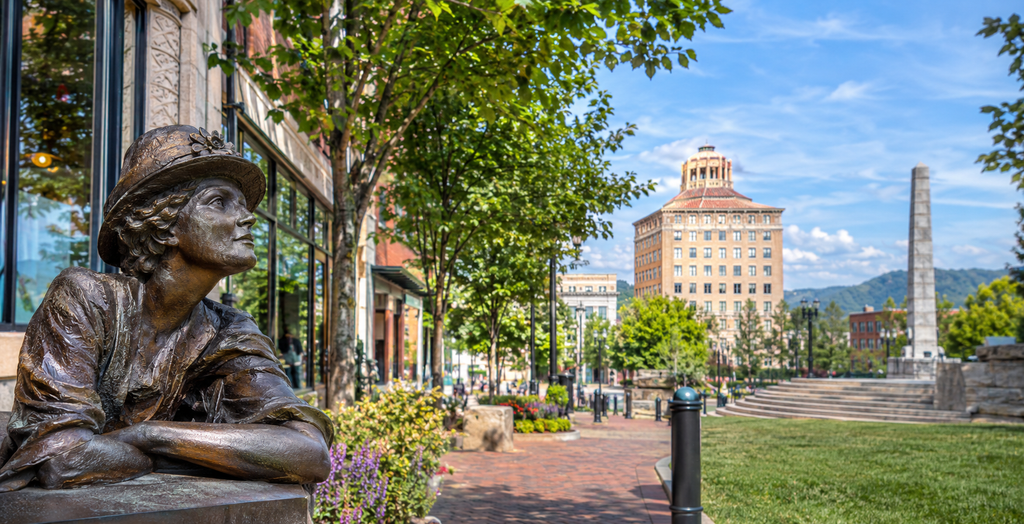
Location: Downtown Asheville
Admission: Free
Best for: History enthusiasts, couples, and first-time visitors
Suggested time: 1–2 hours
The Asheville Urban Trail is an excellent introduction to the city’s architecture, history, and cultural identity.
This self-guided walking route stretches approximately 1.7 miles through downtown Asheville and features 30 sculptural stations. Each stop highlights an important person, event, or architectural detail connected to the city’s past.
Visitors encounter historic buildings, unusual sculptures, and plaques explaining how Asheville developed into a mountain destination.
The route includes stories about influential residents, early transportation, architecture, and the city’s economic and cultural transformation.
Unlike a guided walking tour, the Urban Trail allows visitors to explore at their own pace. You can complete the entire route or select a smaller section while visiting surrounding attractions.
The recommended starting point is the “Walk Into History” marker near the Asheville Art Museum at Pack Square Park.
Planning tip: Download the official Urban Trail map before leaving. Downtown parking may require payment, but following the trail itself costs nothing.
2. Discover Asheville’s Black Cultural Heritage Trail
Location: Downtown, Southside, and River Area neighborhoods
Admission: Free
Best for: Cultural history, educational walks, and heritage tourism
Suggested time: 45 minutes to 2.5 hours, depending on the route
The Asheville Black Cultural Heritage Trail offers a meaningful opportunity to learn about the communities and individuals who helped shape the city.
Unveiled in 2023, this self-guided experience includes 14 stops and 20 interpretive panels across three historically significant Black neighborhoods.
The installations highlight contributions to education, business, architecture, activism, and community development.
Visitors can discover the stories of influential residents, historic institutions, and everyday people whose achievements are essential to understanding Asheville.
Unlike conventional museum experiences, the trail uses public spaces and neighborhood landmarks to connect visitors directly with the locations where history unfolded.
Each section can be explored independently, making the route suitable for travelers who want a shorter educational experience.
The Downtown section works particularly well alongside the Asheville Urban Trail.
Planning tip: Use the official trail map to select a neighborhood section. Road conditions and pedestrian access may vary around the River Area as recovery work continues.
3. Relax at Pack Square Park
Location: 80 Court Plaza, Asheville
Admission: Free
Best for: Families, outdoor relaxation, and downtown sightseeing
Suggested time: 30–60 minutes
Pack Square Park serves as a central gathering space in downtown Asheville.
Its landscaped grounds, paved walkways, public artwork, and seating areas provide a comfortable setting for a break between sightseeing stops.
Visitors can admire the surrounding architecture, enjoy the open green spaces, and observe daily activity in one of the city’s most recognizable public spaces.
The park also contains sculptures and interpretive features that reflect Asheville’s history.
Families traveling with kids can enjoy the outdoor setting without purchasing attraction tickets. During warmer months, the Splasheville splash pad may operate according to the city’s seasonal schedule.
Pack Square Park often serves as a setting for community gatherings, performances, and seasonal celebrations.
Because it sits close to galleries, historic buildings, and restaurants, it works well as a central meeting point for a walking itinerary.
Planning tip: The park is generally open from 6 a.m. to 10 p.m. Check the city’s current operating information for the splash pad and any event-related restrictions.
4. Wander Into the Shops at Grove Arcade
Location: 1 Page Avenue, Asheville
Admission: Free to enter
Best for: Architecture, window-shopping, and rainy-day sightseeing
Suggested time: 30–60 minutes
Grove Arcade is one of downtown Asheville’s most distinctive architectural landmarks.
Opened in 1929, this historic commercial building combines decorative stonework, elegant interior spaces, and an atmosphere that recalls an earlier era of American shopping arcades.
Visitors can stroll through the building, admire its architectural details, and explore the variety of locally operated businesses.
The interior features boutiques, specialty retailers, restaurants, and an artist marketplace showcasing handmade goods.
Even without plans to go shopping, the building is worth visiting for its visual character and connection to Asheville’s commercial history.
It also provides a useful indoor stop during rainy or unusually cold weather.
Travelers who enjoy photography can appreciate the arcade’s historic design, while others may prefer browsing displays of jewelry, clothing, home goods, and regional creations.
Planning tip: General building hours are posted as Monday–Saturday, 9 a.m.–7 p.m., and Sunday, 10 a.m.–5 p.m. Individual businesses may follow different schedules.
5. Explore the South Slope Mural Trail
Location: South Slope district, near Coxe Avenue
Admission: Free
Best for: Street photography, public artwork, and creative neighborhoods
Suggested time: 1–2 hours
Asheville’s South Slope neighborhood offers a colorful introduction to the city’s contemporary creative culture.
The South Slope Mural Trail highlights artwork painted across buildings, walls, and other outdoor spaces.
The self-guided route covers approximately two miles and features a collection of murals celebrating local creativity, community identity, and artistic expression.
Each installation has its own visual character, ranging from large abstract compositions to detailed imagery inspired by regional history.
Mural hopping is particularly enjoyable for photographers because the artwork transforms otherwise ordinary streets and industrial buildings.
Visitors can explore the neighborhood independently, stopping whenever a mural catches their attention.
South Slope is also known for its breweries and restaurants, although visiting those establishments is optional.
This makes the trail an appealing choice for travelers interested in Asheville’s creative scene without paying for a structured experience.
Planning tip: Begin near Coxe Avenue and use the official mural map. Individual artworks may change or disappear, so the published route is a guide, not a guarantee that every installation will remain.
6. Browse Local Artwork at Woolworth Walk
Location: 25 Haywood Street, Asheville
Admission: Free to browse
Best for: Local artwork, indoor sightseeing, and historic storefronts
Suggested time: 30–45 minutes
Woolworth Walk combines a gallery experience with the character of a historic downtown retail building.
The locally owned gallery showcases works by Asheville-area artists, giving visitors a chance to discover different styles and creative traditions in one location.
Displays feature a changing selection of paintings, ceramics, photography, jewelry, and other handmade pieces.
The space is especially interesting for visitors who enjoy seeing how regional artists interpret landscapes, everyday life, and personal experiences.
You can browse without purchasing anything, making it a practical addition to a low-cost downtown itinerary.
The building also retains an old-fashioned soda fountain, although food and drinks are purchased separately.
Woolworth Walk works well as a shorter indoor activity between the Urban Trail and nearby shops.
Planning tip: The gallery currently lists hours of 11 a.m.–6 p.m. Monday through Saturday and 11 a.m.–5 p.m. Sunday. Holiday and severe-weather closures may apply.
7. Visit the Center for Craft
Location: 67 Broadway Street, Asheville
Admission: Free gallery access
Best for: Contemporary design, exhibitions, and creative inspiration
Suggested time: 30–60 minutes
The Center for Craft introduces visitors to contemporary craft practices and the creative processes behind handmade objects.
Its exhibitions explore the intersection of traditional techniques, modern design, materials, and artistic innovation.
Depending on the current exhibition, visitors may encounter work involving textiles, ceramics, wood, glass, and experimental materials.
The gallery provides an opportunity to learn how artists transform familiar materials into functional objects or expressive installations.
Unlike many cultural institutions, the Center for Craft welcomes visitors into its gallery spaces without requiring general admission.
The exhibitions change throughout the year, so repeat visitors may discover something different each time.
Its downtown location also makes it easy to combine with nearby historic buildings and independent galleries.
Planning tip: Gallery hours are generally Monday–Saturday, 10 a.m.–6 p.m. Certain workshops and special programs may have separate registration requirements or costs.
8. Explore Black Mountain College Museum + Arts Center
Location: 120 College Street, Asheville
Admission: Free; donations suggested
Best for: Modern art, cultural history, and educational exhibitions
Suggested time: 45–90 minutes
The Black Mountain College Museum + Arts Center celebrates one of the most influential experimental educational institutions in American creative history.
Although Black Mountain College operated near the town of Black Mountain from 1933 to 1957, its legacy continues through this cultural institution in downtown Asheville.
Exhibitions examine the artists, educators, designers, and thinkers connected to the college.
Visitors can discover how the institution encouraged experimentation across painting, performance, architecture, literature, and other creative disciplines.
The museum’s changing displays make it a worthwhile stop for visitors interested in American cultural history.
Its accessible downtown location means travelers can pair it with an afternoon of architectural sightseeing.
The museum offers a genuine no-cost indoor attraction rather than a venue available only through occasional promotional admission.
Planning tip: Regular hours are Tuesday–Saturday, 11 a.m.–5 p.m. The museum closes between certain exhibitions and on federal holidays, so confirm current dates before visiting.
9. Discover Working Artists in the River Arts District
Location: River Arts District, west of downtown Asheville
Admission: Free to explore participating studios and galleries
Best for: Creative travelers, couples, and locally made artwork
Suggested time: 1–3 hours
The River Arts District is one of Asheville’s most recognizable creative neighborhoods.
Located near the French Broad River, the district features working studios, galleries, and spaces where visitors can discover local artists and their creative processes.
Rather than viewing artwork exclusively in a traditional museum setting, visitors may encounter artists painting, shaping clay, working with textiles, or producing handmade decorative pieces.
Some studios offer demonstrations, while others focus on displaying finished creations.
The area’s industrial architecture adds character to the experience, with former commercial and manufacturing spaces now used for creative businesses.
River Arts District Artists also organizes monthly Second Saturday Art Strolls, which may include demonstrations and a complimentary trolley.
Hurricane Helene significantly damaged parts of the neighborhood in 2024. Although many studios have reopened, some properties and surrounding public spaces are still recovering.
Planning tip: Studio hours vary. Late morning through afternoon is generally a useful visiting window, but check individual businesses through the River Arts District Artists directory before traveling.
10. Stroll Through Asheville Botanical Garden
Location: 151 W.T. Weaver Boulevard, Asheville
Admission: Free entry and parking
Best for: Nature lovers, peaceful walks, and native plants
Suggested time: 45–90 minutes
Asheville Botanical Garden provides a peaceful natural setting close to the city center.
The garden focuses on plants native to the Southern Appalachian region, making it a valuable destination for visitors interested in local ecology.
Walking paths lead through wooded sections, native plant collections, and areas where visitors can appreciate the region’s diverse vegetation.
Seasonal changes give the landscape a different appearance throughout the year.
Spring brings fresh foliage and wildflowers, while summer creates a lush environment filled with greenery. Autumn introduces changing leaf colors, and winter reveals the shapes of trees and woodland terrain.
The botanical gardens are particularly appealing to travelers who want time outdoors without committing to a demanding mountain hike.
The property also provides an educational introduction to the plant communities found throughout western North Carolina.
Unlike the North Carolina Arboretum, which generally charges a vehicle parking fee, Asheville Botanical Garden provides complimentary admission and parking.
Planning tip: The grounds are open daily from sunrise to sunset. Some paths are gravel and may not be fully wheelchair accessible.
11. Discover Appalachian Traditions at the Folk Art Center
Location: Blue Ridge Parkway, milepost 382
Admission: Free
Best for: Appalachian heritage, craftsmanship, and indoor sightseeing
Suggested time: 45–90 minutes
The Folk Art Center showcases the craftsmanship and artistic traditions of the Southern Appalachian Mountains.
Located along the Blue Ridge Parkway, the center is operated in connection with the Southern Highland Craft Guild.
Visitors can explore galleries displaying regional work, including pottery, textiles, woodworking, jewelry, and other handcrafted objects.
These exhibits help explain how traditional skills have evolved across generations of Appalachian makers.
Depending on the schedule, visitors may also see craft demonstrations that reveal the techniques behind handmade pieces.
The center offers an indoor alternative for travelers who want to experience the region’s culture without spending an entire day outside.
It also pairs naturally with nearby Parkway overlooks and scenic drives.
Planning tip: The Folk Art Center generally operates daily from 10 a.m.–5 p.m., with holiday exceptions and possible weather-related closures. Gallery admission is complimentary, while merchandise is sold separately.
12. Drive the Blue Ridge Parkway for Mountain Views
Location: Multiple access points around Asheville
Admission: No Parkway entrance fee
Best for: Scenic drives, photography, and mountain sightseeing
Suggested time: 2–4 hours
The Blue Ridge Parkway offers some of the most spectacular scenery in the eastern United States.
Stretching 469 miles through Virginia and North Carolina, this scenic highway provides access to forested ridges, mountain overlooks, and panoramic views.
Visitors can take in much of the landscape from designated roadside stops without a strenuous hike.
The views change considerably by season.
Spring introduces fresh greenery and flowering plants, summer produces lush mountain landscapes, and autumn brings colorful foliage across the surrounding ridges.
Winter offers different views through leafless forests, although snow, ice, and maintenance restrictions can close portions of the route.
The Parkway is one of the strongest outdoor options for travelers who want memorable scenery without attraction admission fees.
For more route-specific details, our guide to Blue Ridge Parkway scenic drives near Asheville covers Craggy Gardens, Mount Mitchell, Mount Pisgah, and other notable viewpoints.
Planning tip: The National Park Service continues to manage Helene-related repairs and periodic road restrictions. Check the official Parkway road status before traveling. Fuel and transportation costs still apply.
13. Hike to Craggy Pinnacle for Panoramic Views
Location: Blue Ridge Parkway, milepost 364.2
Admission: Free
Best for: Short hikes, photography, and mountain landscapes
Suggested time: 1–2 hours at the trailhead
Craggy Pinnacle offers a rewarding opportunity to experience the Blue Ridge Mountains from an elevated viewpoint.
The trail is approximately 1.4 miles round trip and leads through a forested landscape to an established summit overlook.
Along the route, visitors encounter twisted tree branches, rhododendron, exposed roots, and rocky sections that reflect the mountain environment.
The final viewpoint provides expansive views across neighboring ridges and valleys.
On clear days, the landscape appears to stretch toward the horizon in overlapping layers of blue and green.
The short distance makes the outing attractive to visitors who want an outdoor adventure without committing to a full-day excursion.
However, the route includes an uphill climb and uneven terrain, so it is better described as moderate rather than an effortless stroll.
Weather conditions can change quickly at higher elevations, even when downtown Asheville feels warm and calm.
Planning tip: The National Park Service’s 2026 trail listing identifies Craggy Pinnacle as open, but conditions can change. Check the trail and connecting Parkway access before departure, particularly during colder months.
14. Enjoy the French Broad River Greenway at Carrier Park
Location: 220 Amboy Road, Asheville
Admission: Free
Best for: Walking, cycling, and relaxed outdoor recreation
Suggested time: 45–90 minutes
Carrier Park offers riverside scenery along the French Broad River.
The park’s paved greenway allows visitors to enjoy a relatively relaxed outdoor experience without traveling into the higher mountains.
Walking and cycling along the open trail sections offer opportunities to appreciate the river corridor, nearby vegetation, and changing seasonal landscape.
The surrounding area feels different from downtown Asheville, providing a quieter environment for a morning walk or afternoon outing.
Carrier Park is also a convenient starting point for visitors interested in exploring portions of the French Broad River Greenway.
However, Hurricane Helene caused extensive damage to several park facilities.
As of the city’s October 2026 update, the greenway through Carrier Park, parking lot, wetlands education area, picnic shelter, rolling lawn, and velodrome are open.
The playground, skating rink, basketball court, lawn bowling court, sports field, and sand volleyball courts remain closed.
Planning tip: Visit the City of Asheville’s Carrier Park page before planning activities beyond the open trails. Do not assume that all riverfront recreation facilities have reopened.
15. Attend Free Concerts and Seasonal Community Events
Location: Pack Square Park and other Asheville venues
Admission: Free for selected public events
Best for: Live music, festivals, and community experiences
Suggested time: 1–3 hours
Asheville’s cultural calendar often includes public events that visitors can enjoy without purchasing admission.
Outdoor concerts, community gatherings, seasonal celebrations, and neighborhood festivals provide opportunities to experience the city’s creative atmosphere.
One established example is Downtown After 5, a concert series presented by the Asheville Downtown Association.
The 2026 events took place in Pack Square Park and featured performances by regional and visiting musicians.
Admission was complimentary, while food, beverages, and marketplace purchases were available separately.
Other seasonal programs may include public performances, outdoor movies, holiday celebrations, and neighborhood events.
These experiences are particularly appealing to visitors who want to experience the city’s local music scene.
However, schedules, locations, and admission policies can change from year to year.
Planning tip: The 2026 Downtown After 5 season has ended. Check the city’s event calendar and organizer announcements for future performances rather than assuming a previous year’s dates will repeat.
How to Enjoy Asheville on a Budget
A memorable trip doesn’t require visiting every major attraction or buying multiple tickets.
The easiest way to limit expenses is to group nearby destinations and plan around places that do not charge general admission.
For example, a downtown outing could combine the Urban Trail, Pack Square Park, Grove Arcade, and a few independent galleries.
Travelers interested in creative experiences can spend another afternoon exploring the River Arts District.
Nature lovers might prefer a morning at Asheville Botanical Garden followed by a scenic Parkway excursion, weather and road access permitting.
A few practical habits can help keep sightseeing expenses manageable:
- Group nearby stops: Combining several downtown attractions reduces unnecessary driving and parking expenses.
- Bring water and snacks: A picnic or packed lunch can reduce food costs during longer outdoor outings.
- Check admission policies: Free gallery access does not necessarily include workshops, special exhibitions, or guided programs.
- Review parking options: Some attractions offer complimentary parking, while downtown garages and metered spaces generally charge.
- Confirm operating schedules: Gallery hours, events, trail access, and seasonal facilities can change.
- Plan around the weather: Indoor galleries provide alternatives when rain makes hiking or scenic drives less appealing.
A flexible itinerary often provides a more enjoyable experience than attempting to visit numerous attractions in one day.
A One-Day Itinerary for Free Sightseeing
Visitors with only one day can combine Asheville’s cultural highlights with its outdoor scenery.
Morning: Historic Downtown
Start with the Asheville Urban Trail and explore the historic streets around Pack Square.
Visit Grove Arcade, admire the architecture, and browse local galleries along nearby streets.
Late Morning: Art and Cultural Exhibitions
Stop at the Center for Craft or Black Mountain College Museum + Arts Center, depending on current exhibition schedules.
Both provide indoor cultural experiences without standard admission fees.
Afternoon: Botanical Garden or River Arts District
Choose Asheville Botanical Garden for a peaceful nature walk.
Alternatively, explore working studios in the River Arts District, where visitors can discover locally made artwork and creative spaces.
Late Afternoon: Mountain Scenery
If road conditions permit, finish with a short Blue Ridge Parkway drive and a visit to accessible overlooks.
A mountain outing requires additional travel time, so visitors who prefer a relaxed day may want to save the Parkway for a separate morning.
This itinerary balances history, creative culture, and scenic landscapes while keeping paid attractions optional.
Which Asheville Attractions Are Not Usually Free?
Some of Asheville’s best-known destinations charge admission or have additional access costs.
Biltmore Estate, for example, requires paid admission for most visitors. Its historic mansion, landscaped gardens, winery, and estate attractions are not generally available through complimentary public entry.
The Asheville Museum of Science normally charges admission, although eligible Buncombe County library cardholders may reserve a ZOOM Pass through the local library system.
The Asheville Art Museum also charges general admission, with certain complimentary admission categories and promotional programs.
The North Carolina Arboretum generally charges a vehicle parking fee, even though separate ticket purchases may not be necessary for standard grounds access.
Understanding these differences helps visitors distinguish genuinely no-cost attractions from locations that offer occasional complimentary access.
A trip can still include ticketed experiences, but plan them separately from the activities listed above.
Where to Stay When Exploring Asheville
Choosing a comfortable place to stay can make a multi-day visit more convenient.
Travelers planning to explore downtown, nearby trails, and regional attractions may benefit from accommodations that offer separate bedrooms, shared living areas, and space to relax between outings.
Vacation rentals can also provide practical amenities, such as kitchens for preparing meals or gathering spaces for families and groups.
Paradiso Homes offers Asheville vacation rentals in the surrounding region, with accommodations suited to different group sizes and travel preferences.
Because properties may be located in neighboring communities rather than within Asheville city limits, travelers should compare each home’s actual location with their planned activities.
Driving distances to downtown, the Blue Ridge Parkway, and other attractions vary by property.
Discover Asheville Without Overspending
Asheville combines mountain scenery, historic architecture, cultural attractions, and outdoor recreation in ways that make memorable experiences accessible to travelers with different budgets.
A day might begin with a walk through historic downtown, continue with a visit to working artist studios, and finish with views across the Blue Ridge Mountains.
The variety of public trails, galleries, gardens, and community spaces makes it possible to enjoy the area’s character without relying exclusively on ticketed attractions.
By planning around current access information, choosing nearby stops, and leaving room for spontaneous discoveries, visitors can experience many of Asheville’s highlights while keeping sightseeing expenses under control.
Frequently Asked Questions
What are the best no-cost attractions in Asheville?
Asheville offers several worthwhile attractions that do not require general admission.
Popular options include:
- Asheville Urban Trail for self-guided history.
- Asheville Botanical Garden for native plants and peaceful walks.
- River Arts District for working studios and galleries.
- Blue Ridge Parkway for scenic mountain views.
- Grove Arcade for architecture and indoor browsing.
These destinations provide a good introduction to the area’s cultural and natural highlights. Parking, shopping, and optional experiences may still cost extra.
Are there any free museums in Asheville?
Yes. Black Mountain College Museum + Arts Center offers complimentary admission (donations encouraged), while the Center for Craft provides free gallery access.
Other institutions have more limited eligibility:
- Asheville Art Museum offers complimentary admission for specific visitor categories and eligible promotional dates.
- Asheville Museum of Science participates in the Buncombe County library ZOOM Pass program.
- Some galleries and cultural institutions offer free exhibitions but charge for special programs.
Check each institution’s current admission policy before visiting. Library-based passes generally require an eligible library card and advance arrangements.
What can families do in Asheville without paying admission?
Families can explore Pack Square Park, walk sections of the Urban Trail, enjoy Asheville Botanical Garden, or visit accessible Parkway overlooks.
The River Arts District also offers opportunities for children to discover different artistic techniques.
For additional age-specific ideas, our guide to things to do in Asheville with kids covers outdoor attractions, educational destinations, and family activities.
Some of those additional experiences require paid admission, so distinguish them from the no-cost options.
Is the Blue Ridge Parkway free to visit?
Yes. The Blue Ridge Parkway does not charge a general entrance fee.
Visitors can enjoy scenic drives, accessible overlooks, and designated trails without purchasing an admission ticket.
However, certain facilities, campgrounds, and services may charge separate fees.
Weather-related closures, maintenance work, and Hurricane Helene recovery projects can affect road and trail access. Check current National Park Service information before departure.
Can visitors still explore Asheville after Hurricane Helene?
Yes. Downtown Asheville, along with many art galleries, cultural institutions, and popular attractions, has reopened and welcomes visitors.
However, recovery work continues in certain riverfront areas and along portions of the regional road and trail network.
Check current conditions before visiting:
- Riverfront parks and greenways.
- Blue Ridge Parkway sections and trailheads.
- River Arts District studios and nearby facilities.
- Seasonal outdoor recreation areas.
Choosing confirmed open attractions allows visitors to enjoy Asheville while respecting active restoration work and temporary restrictions.