


Asheville Botanical Gardens Visitor Guide: What to See & Know

By: Adam Jerold Cansino | November 18, 2026
The Botanical Gardens at Asheville offer a peaceful escape into the natural beauty of the Southern Appalachian Mountains. Located near the University of North Carolina Asheville, this 10-acre destination features native wildflowers, wooded walking paths, peaceful streams, and opportunities to learn about the region’s diverse plant life.
Whether you’re planning a family outing, looking for a relaxing nature walk, or exploring free attractions in Asheville, the botanical gardens provide an enjoyable experience without requiring an entire day.
Unlike larger landscaped attractions, this botanical garden emphasizes plants native to western North Carolina and their natural habitats. Visitors can explore the grounds at their own pace while discovering the ecological diversity that makes the surrounding mountains special.
This guide covers everything you need to know before visiting, including admission prices, hours, walking trails, seasonal highlights, parking, and nearby activities.
Where Are the Botanical Gardens at Asheville Located?
The Botanical Gardens at Asheville are located at 151 W.T. Weaver Boulevard, Asheville, NC 28804, adjacent to the University of North Carolina Asheville campus.
The attraction is conveniently located north of downtown Asheville, making it easy to add to a sightseeing itinerary. Visitors arriving from central Asheville can travel north along Merrimon Avenue, then turn onto W.T. Weaver Boulevard.
The location is especially convenient for travelers who want to enjoy nature without committing to a longer mountain excursion. The surrounding university neighborhood also provides access to other walking routes and outdoor spaces.
For more attractions throughout the area, explore our 15 Best Things to Do in Asheville, NC: Attractions & Activities.
Opening Hours and Admission Prices
One of the biggest advantages of visiting the botanical gardens is that admission and parking are free.
The grounds are open year-round, offering opportunities to experience the changing seasons.
Current visitor information includes:
- Garden hours: Daily, sunrise to sunset.
- Visitor Center hours: Daily, 10:00 AM to 4:00 PM.
- Admission: Free for all visitors.
- Parking: Free on-site parking.
- Address: 151 W.T. Weaver Boulevard, Asheville, NC 28804.
- Contact: 828-252-5190.
The gardens are maintained by an independent nonprofit organization that relies on donations, memberships, and other contributions to support its educational and conservation activities.
Although regular visiting hours are consistent, special events, maintenance, and weather conditions can occasionally affect access. Check the official botanical garden website before traveling.
What to See at the Asheville Botanical Gardens
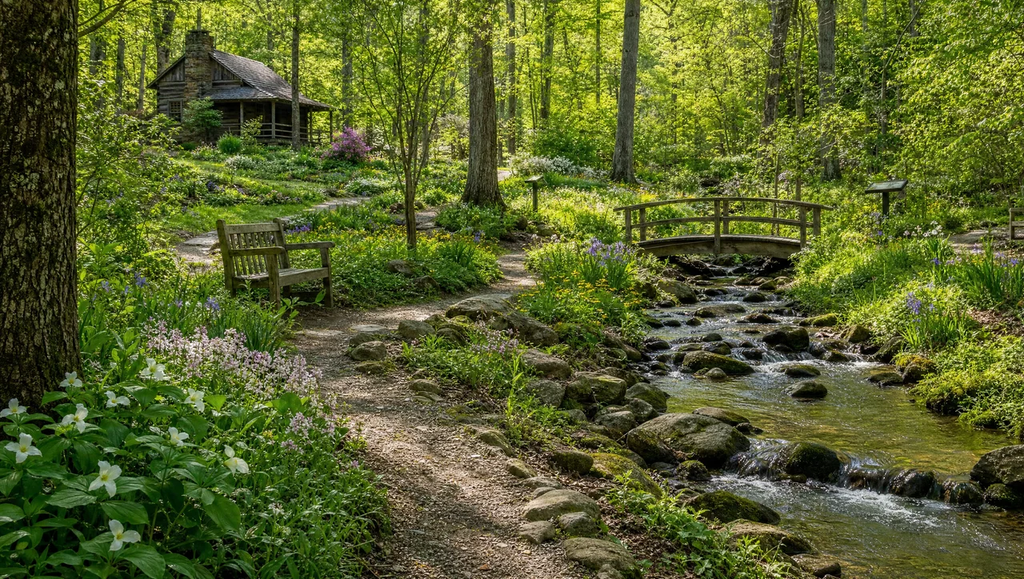
The botanical gardens feature a collection of native Southern Appalachian vegetation, natural habitats, and peaceful places to relax.
Instead of focusing primarily on elaborate decorative landscaping, the property highlights the plants and ecosystems found throughout western North Carolina.
Native Wildflowers and Appalachian Plants
One of the main attractions is the collection of native wildflowers, shrubs, and trees.
The property supports approximately 600 species of Southern Appalachian flora, making it an excellent destination for visitors interested in regional biodiversity.
Depending on the season, you may encounter trilliums, wild geraniums, dwarf crested iris, foamflowers, goldenrods, and asters.
These species contribute to the local ecosystem by providing habitat and food for pollinators, birds, and other wildlife.
Spring is particularly appealing for photography enthusiasts because different flowering species appear throughout the wooded landscape.
Scenic Walking Trails and Creek Views
The gardens include a roughly half-mile loop trail that winds through woodland habitats, meadows, and creekside areas.
This short route is ideal for travelers seeking a gentle outdoor experience rather than a strenuous hike.
Along the walk, visitors can enjoy:
- Shaded woodland pathways.
- Native flowering vegetation.
- Small streams and bridges.
- Open meadow areas.
- Quiet spots for photography and nature observation.
The route is generally manageable for many visitors, though some sections include gravel surfaces and small hills.
Allow time to explore slowly rather than treating the trail as a fitness challenge. The setting encourages visitors to appreciate the surrounding environment and discover smaller natural details.
Historic Features and Quiet Garden Spaces
Beyond the native vegetation, visitors can discover historic and educational features scattered throughout the property.
The garden map identifies landmarks such as Hayes Cabin, Margie’s Springhouse, Sunshine Meadow, the bird viewing deck, and several bridges.
These features add variety to a visit and provide opportunities to appreciate the relationship between the landscape and local history.
Benches and designated picnic areas also make the grounds suitable for a relaxing afternoon.
Best Time to Visit the Botanical Gardens
The best time to explore the gardens depends on whether you prefer colorful wildflowers, summer greenery, autumn foliage, or quiet winter scenery.
Spring: Peak Wildflower Season
April through May is generally the most popular period for native wildflowers.
During spring, trilliums, spring beauties, and other flowering species create a colorful landscape throughout the wooded areas.
The botanical gardens are especially beautiful during this period, although blooming conditions vary with temperature and rainfall.
Summer: Greenery and Pollinator Activity
Summer brings lush vegetation, shaded pathways, and additional flowering species.
Mid-August can produce another noticeable bloom peak, particularly among sun-loving species such as goldenrod, blazing-star, and Joe-pye weed.
Morning visits may be more comfortable during warmer weather.
Fall and Winter: Seasonal Scenery
Autumn introduces changing leaves and late-season flowers, providing a quieter alternative to peak spring visitation.
Winter offers a different perspective, with exposed tree branches, evergreen vegetation, and opportunities to observe the landscape’s underlying structure.
Although fewer flowers are visible, the grounds remain an appealing destination for a peaceful walk.
Is the Asheville Botanical Garden Family-Friendly?
The botanical garden is a good choice for families seeking a relaxed outdoor activity.
Children can observe native vegetation, watch birds, explore walking paths, and learn about local ecosystems through firsthand experiences.
Parents should supervise young children, especially near streams, bridges, and uneven trail sections.
Because the grounds are dedicated to plant conservation, visitors should remain on established paths and avoid collecting flowers, leaves, or other natural materials.
For families planning a longer outing, consider combining the gardens with another low-intensity attraction elsewhere in Asheville.
Accessibility, Parking, and Visitor Rules
The gardens provide free parking near the main entrance and accessible parking spaces for visitors with mobility needs.
The Visitor Center, a small paved area, and a bird viewing deck are wheelchair accessible.
However, much of the trail system consists of hard-packed gravel surfaces with gentle hills. Some wheelchair users may find portions manageable, but the entire property is not fully accessible.
Visitors should also follow several important rules:
- Stay on designated paths and lawns.
- Do not pick flowers or disturb wildlife.
- Dogs and other pets are prohibited, except service dogs.
- Bicycling and sporting activities are not permitted.
- Photography and nature observation are encouraged.
- Picnics are permitted in designated areas.
- Children must remain supervised.
These guidelines help protect sensitive habitats while maintaining a peaceful environment for everyone.
Tips for Planning Your Asheville Visit
A little preparation can make your visit more comfortable and enjoyable.
Allow approximately 45–90 minutes. Although the main loop is short, extra time gives you opportunities to photograph flowers, identify wildlife, and enjoy the scenery.
Wear comfortable walking shoes. Gravel pathways and occasional uneven surfaces make supportive footwear preferable.
Bring water and weather-appropriate clothing. Conditions can change throughout the day, particularly during the warmer months.
Visit during daylight hours. The outdoor grounds open at sunrise and close at sunset, while Visitor Center facilities have shorter operating hours.
Check current access information. Hurricane Helene affected numerous outdoor attractions around Asheville in 2024. The garden’s official website currently lists regular daily opening hours, but visitors should confirm any temporary trail restrictions or maintenance notices before arriving.
A downloaded garden map can also make it easier to locate landmarks and navigate the walking routes.
Nearby Attractions and Things to Do in Asheville
The botanical gardens fit naturally into a sightseeing itinerary featuring outdoor recreation, shopping, and cultural attractions.
After exploring the grounds, visitors can head toward central Asheville for restaurants, shops, galleries, and historic architecture.
Other activities worth considering include:
- Exploring downtown Asheville and its independent shops.
- Walking through the historic Grove Arcade.
- Visiting the River Arts District to discover local studios.
- Enjoying scenic mountain drives when road conditions permit.
- Exploring additional nature attractions around western North Carolina.
Travelers interested in larger botanical collections can also consider the North Carolina Arboretum, south of the city near the Blue Ridge Parkway.
Unlike the smaller botanical gardens, that destination offers a larger network of trails, curated landscapes, and exhibition spaces.
Combining a short nature walk with nearby sightseeing is an excellent way to experience different sides of Asheville without creating an overly demanding itinerary.
Where to Stay Near Asheville
Choosing comfortable accommodations makes it easier to explore the botanical gardens alongside the region’s other attractions.
For visitors planning several days in the mountains, vacation rentals provide additional flexibility for meals, relaxation, and group travel.
Rather than scheduling every activity around hotel facilities, guests can create an itinerary that balances sightseeing with downtime.
Paradiso Homes offers Asheville vacation rentals for travelers exploring Asheville and the surrounding mountain region.
A vacation rental can be particularly convenient for families or groups who want shared living areas and a comfortable place to return after a day of outdoor activities.
When selecting accommodations, consider your preferred driving distance to attractions, restaurants, scenic routes, and other destinations.
Final Thoughts
The Botanical Gardens at Asheville are an excellent addition to a western North Carolina getaway, particularly for travelers who appreciate native plants, peaceful walking routes, and accessible outdoor recreation.
With free admission, convenient parking, and a scenic half-mile loop, the attraction offers a rewarding experience without requiring a large budget or lengthy commitment.
Whether you’re visiting during spring wildflower season or enjoying the quieter atmosphere of autumn, the gardens provide a memorable connection to the Southern Appalachian landscape.
For a more complete trip, pair your visit with downtown sightseeing, scenic drives, and other local attractions.
Frequently Asked Questions
Is admission free at the Botanical Gardens at Asheville?
Yes. Admission to the botanical gardens is free, and visitors can also use the on-site parking area at no cost. Donations are encouraged because the nonprofit organization relies on community support to maintain the grounds and educational programs.
How long does it take to explore the botanical gardens?
Most visitors can explore the main half-mile walking loop and nearby features in approximately 45–90 minutes. Nature photographers, birdwatchers, and visitors interested in identifying native species may prefer additional time.
What are the best months to visit the botanical gardens?
April and May are particularly appealing because many native wildflowers reach peak bloom. Mid-August can offer another strong flowering period, while autumn provides seasonal foliage and quieter walking conditions. Bloom times depend on weather.
Are dogs allowed at the botanical gardens?
No. Dogs and other pets are not permitted on the grounds, although service dogs are allowed. This policy helps protect the plant collections, wildlife, and peaceful environment.
Are the botanical gardens open after Hurricane Helene?
The official website currently lists the grounds as open daily from sunrise to sunset, with the Visitor Center open from 10:00 AM to 4:00 PM. Because recovery work, weather, and maintenance can affect outdoor attractions, visitors should check official updates before their trip.