


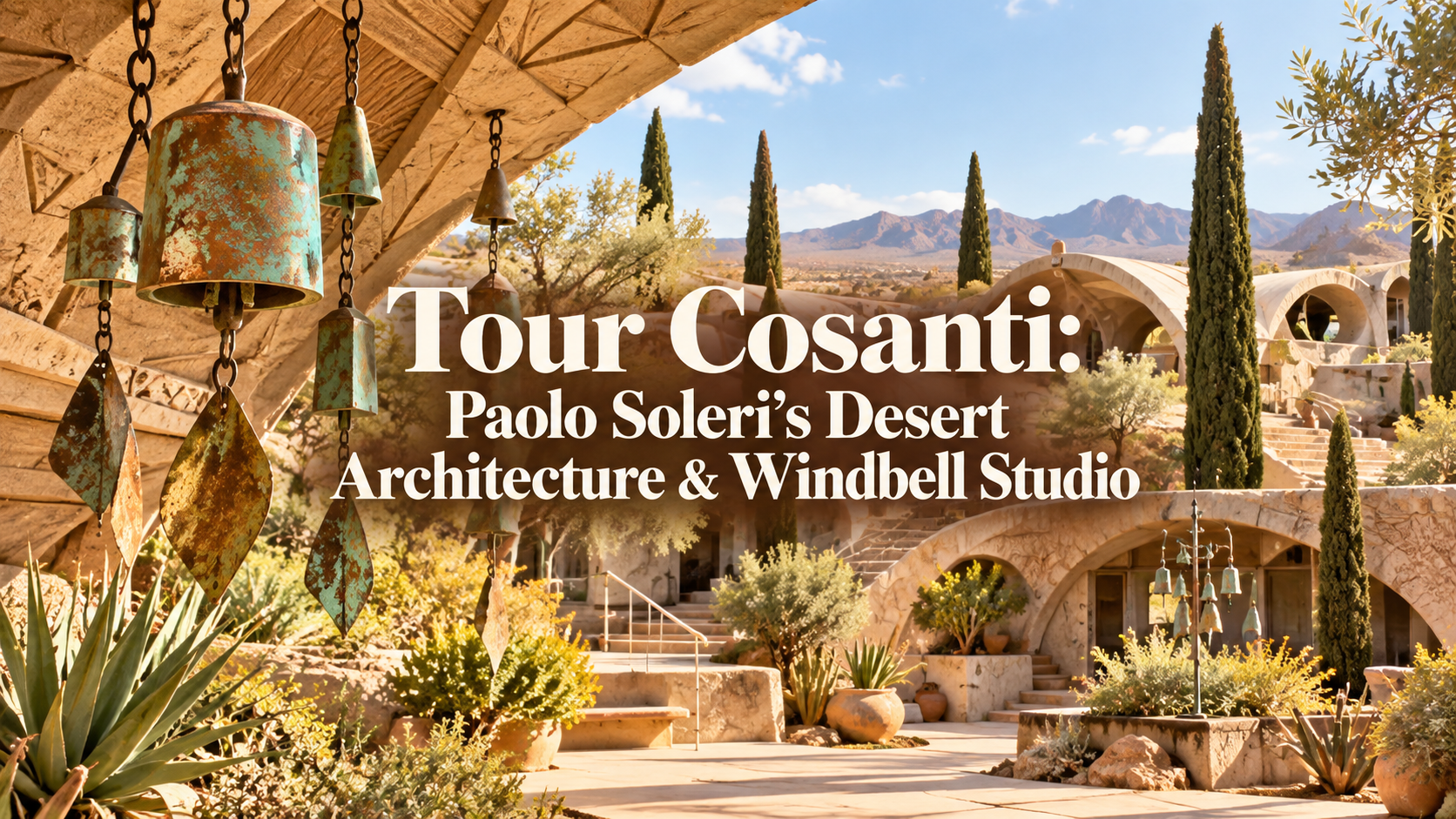
Tour Cosanti: Paolo Soleri’s Desert Architecture & Windbell Studio
By: Adam Jerold Cansino | October 7, 2026
Tucked into a residential corner of Paradise Valley, Cosanti offers one of the most unusual cultural experiences in the Phoenix metropolitan area. Part architectural experiment, part working artisan studio, and part historic site, it lets visitors walk through sculptural spaces shaped by the Arizona desert while handcrafted windbells resonate overhead.
The property began taking shape in the mid-20th century and became a testing ground for ideas about architecture, ecology, passive climate control, and compact living. Today, the site remains closely connected to the handcrafted bronze and ceramic windbells Cosanti Originals produces. Cosanti is listed on the Arizona Registry of Historic Places, and many of its original experimental structures survive.
For travelers building an itinerary around the area’s art, architecture, wellness, hiking, and dining, Cosanti fits naturally into a broader Paradise Valley stay. It is also one of the distinctive experiences featured in our guide to the 10 Best Things to Do in Paradise Valley, AZ for a Luxury Getaway.
An Exciting Museum Experience: Cosanti Began Its Development in the 20th Century
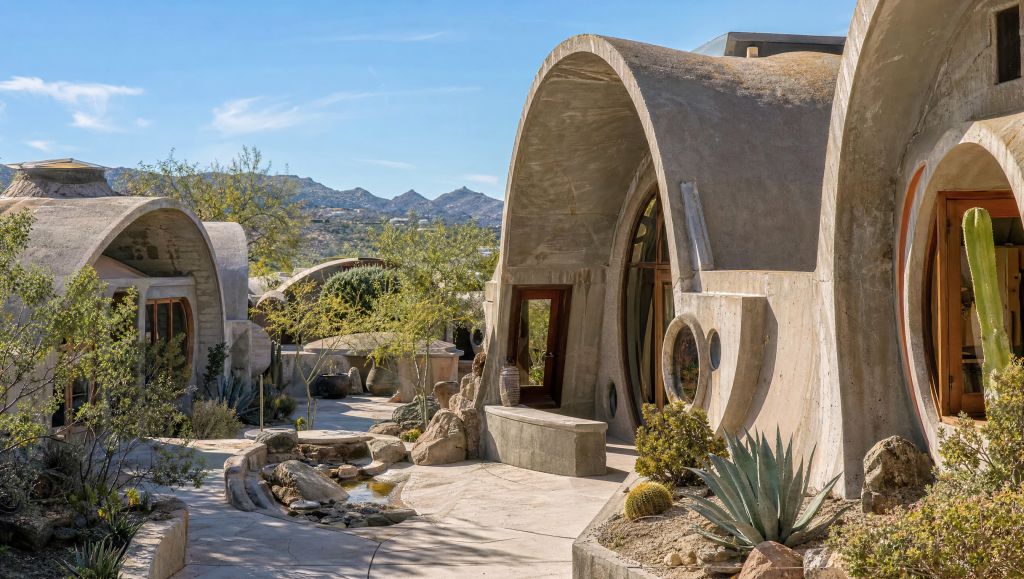
Cosanti does not feel like a conventional museum campus. Instead of moving through polished galleries filled with objects separated from their original context, visitors step directly into an environment where buildings, courtyards, workshops, desert vegetation, sunlight, and sound all interact.
The property’s structures began developing in the 1950s as architectural experiments. Several were created with an earth-casting technique in which concrete was formed over shaped soil before the earth underneath was removed. The process helped produce the site’s distinctive curved forms, textured surfaces, vaults, apses, and partially open-air spaces.
These buildings were more than sculptural exercises. Their orientation and construction explored passive heating and cooling, shade, solar exposure, and ways architecture could respond directly to the surrounding climate. The result is a place that feels deeply connected to its Sonoran Desert setting rather than simply placed on top of it.
Visitors interested in mid-century modern design may recognize the same era’s willingness to reconsider conventional architecture, although Cosanti developed its own highly individual visual language. Curved concrete, earth-toned textures, irregular openings, built-in seating, and dramatic transitions between interior and exterior spaces make the site feel both archaeological and futuristic.
That duality is one reason Cosanti continues to appeal to photographers and design travelers. Depending on where you stand, the property can resemble a desert ruin, an experimental residence, an art studio, or a landscape sculpture.
Its importance also extends beyond aesthetics. The site served as a testing ground for ideas that later influenced Arcosanti, the experimental community established north of Phoenix. Those concepts centered on reducing unnecessary consumption of land and resources while creating environments where architecture and ecology work more closely together.
For visitors, however, the experience does not require an architecture degree. Much of the enjoyment comes from simply observing how the site changes as you walk through it: narrow passages suddenly open into courtyards, curved roofs frame portions of the desert sky, and shaded spaces provide a noticeable contrast to the Arizona sun.
One thing worth noticing is the architecture itself, rather than treating the buildings merely as a backdrop for the windbell workshop. Details in the concrete reveal the experimental construction methods and handmade quality that define the property.
Use Artnet to Look for Art In Windbell Studio
The sound of bells is one of the most memorable parts of visiting Cosanti.
Cosanti Originals traces its windbell tradition to 1955, when artisans created the first ceramic bells using natural Arizona clay. Today, artisans continue producing ceramic and bronze designs by hand, so differences in texture, coloration, decorative patterns, and sound add to each piece’s character.
Depending on the day and tour schedule, visitors may be able to observe parts of the production process. Current guided weekday tours are intentionally timed around the foundry’s morning bronze pours when conditions allow, although the studio notes that weather and other variables mean a pour cannot be guaranteed on every tour.
Seeing the workshop adds context to objects that might otherwise be viewed only as decorative souvenirs. A bronze bell begins as part of a labor-intensive artistic process, and no two completed pieces are entirely identical.
The bronze collection is known for organic textures and finishes, ranging from weathered green surfaces to brighter polished tones. Traditional bronze patina can include green, reddish-brown, blue-green, pink, and lime variations, while burnished pieces can show warmer metallic tones alongside flashes of blue, purple, orange, or magenta.
For travelers who enjoy studying sculpture materials and fabrication methods, the foundry makes the artistic process particularly tangible. Product descriptions frequently identify the primary materials: bronze for the bell itself and brass for certain fins, emphasizing that these are substantial cast objects rather than lightweight decorative chimes.
Ceramic production has a different character. Ceramic bells are formed using sandy soil or plaster molds, then individually carved and kiln-fired. Their surfaces may include abstract motifs, animals, figures, and nature-inspired patterns. The finished pieces typically have a more earthy and monochromatic appearance than the metallic bells.
You may also notice decorative objects that resemble a ceramic tile or reliefs, as the same interest in carved surfaces, repeated motifs, natural textures, and handcrafted irregularity appears throughout the studio environment.
Collectors sometimes encounter vintage Cosanti pieces through galleries and secondary art markets. Searching a marketplace such as Artnet may also show how collectible design objects from this period have become part of a wider conversation about American architecture and decorative art.
A vintage Paolo design can be especially interesting because earlier pieces help illustrate how motifs, finishes, and forms evolved over time. Still, visitors do not need to be collectors to appreciate the experience. Watching contemporary artisans continue the tradition connects the site’s architectural history with a craft that is still actively practiced.
From certain angles, a hanging group of bells creates almost a sculptural bronze view, with metallic forms suspended against raw concrete, desert plants, and open sky.
Choosing a Windbell or Other Item From Cosanti
For some visitors, walking through the gallery is as enjoyable as touring the architecture.
The windbells are designed as functional art pieces, and their differences are intentional. Two bells of the same basic design can vary in sound, surface texture, decorative pattern, and coloration because they are individually handmade.
If you are considering an item to take home, look beyond appearance alone. Listen to the tone, compare the physical scale, and think about where the piece will hang. Smaller bells can work in sheltered patios and intimate courtyards, while larger arrangements can become stronger architectural features.
The finish also changes the visual effect significantly. A darker weathered surface can blend naturally with desert landscaping, stucco walls, stone, and mature trees. A polished finish creates more contrast and catches changing sunlight throughout the day.
This relationship between object and environment is part of what makes the studio compelling. The bells do not seem separate from the architecture. Their irregular surfaces, earthy colors, shadows, movement, and sound all complement the same handcrafted character seen throughout the grounds.
Some travelers visit primarily to purchase a bell. Others leave without buying anything and still find the working studio valuable because it demonstrates how a design tradition can continue long after its original development.
That continuity is important. Cosanti is not frozen in a single historical moment. The site preserves experimental architecture while functioning as a contemporary workplace where artisans continue producing handmade objects.
The result is very different from encountering vintage pieces only through photographs or a collector’s catalog. Here, the craft remains connected to the environment where much of the design language originated.
Planning a Cosanti Visit From Paradise Valley
Cosanti is located at 6433 E. Doubletree Ranch Road in Paradise Valley, making it easy to incorporate into a morning or afternoon itinerary around the surrounding Scottsdale and Paradise Valley area. The official site currently lists gallery hours of 9 a.m. to 5 p.m. Monday through Saturday and 11 a.m. to 5 p.m. Sunday, with guided tours scheduled on weekdays. Because schedules can change, check directly with Cosanti before visiting.
A guided experience is especially useful for visitors who want more than a visual walk-through. Tours discuss the historic structures, design studio, workshops, and continuing bronze and ceramic traditions.
Allow enough time to slow down rather than rushing through the property. The architecture rewards observation. Look at how shadows fall across curved concrete, notice the difference between enclosed and semi-open spaces, and listen to how the windbell sounds change as you move between courtyards.
Morning can be particularly appealing in the desert because temperatures are often more comfortable, and the directional sunlight emphasizes the buildings’ textures. Comfortable walking shoes are useful because this is an unconventional historic property, not a uniform indoor museum.
Photography enthusiasts may want to focus on the contrast between concrete surfaces, hanging bells, vegetation, circular openings, and bright Arizona skies. Rather than photographing only individual objects, wider compositions often show how architecture, craft, and landscape were intended to work together.
Cosanti also combines well with other Paradise Valley experiences. A morning focused on architecture and design can be followed by a resort lunch, spa treatment, gallery visit, or scenic drive. Hiking travelers can pair it with nearby desert trails, while visitors interested in regional design can continue into Scottsdale for additional architecture and art.
That flexibility makes Cosanti a strong stop for couples, solo travelers, design enthusiasts, photographers, and families with older children who enjoy seeing objects actually being made.
After a day exploring the area’s architecture, trails, restaurants, and cultural attractions, staying in one of Paradiso Homes’ luxury vacation rentals in Paradise Valley, AZ keeps the experience centered in the same desert landscape that makes Cosanti so distinctive.
Cosanti ultimately stands out because it combines several kinds of travel experience in one place. It is historic without feeling static, artistic without operating solely as a gallery, and architectural without separating its buildings from the surrounding environment. The site’s continuing windbell tradition gives visitors something especially unusual: the opportunity to see an artistic language carried from the twentieth century into an active contemporary workshop.
For anyone interested in Arizona design, experimental architecture, handcrafted art, or unusual things to do in Paradise Valley, the property offers a compelling look at the ideas associated with Paolo Soleri and the desert setting that helped shape them.
Frequently Asked Questions
Is Cosanti worth visiting in Paradise Valley?
Yes. Cosanti is particularly worthwhile for travelers interested in architecture, design, handmade art, Arizona history, or unusual cultural attractions. The combination of experimental desert buildings and an active windbell studio makes it different from a traditional museum visit.
Can you see windbells being made at Cosanti?
Guided weekday tours are scheduled to give visitors a chance to observe the working environment, and tours are planned around morning bronze pours when possible. A pour isn’t guaranteed because weather and other variables can affect production.
Do you need a guided tour to visit Cosanti?
Visitors can explore the gallery during its published opening hours, while guided tours provide additional background on the architecture, historic structures, workshops, and craft traditions. Check current tour availability before your trip.
What is Cosanti known for?
Cosanti is known for its experimental desert architecture and its handcrafted bronze and ceramic windbells. It served as a residence, studio, and architectural testing ground before becoming one of Paradise Valley’s most recognizable cultural sites.
How does Cosanti fit into a Paradise Valley itinerary?
Cosanti works well as a morning or afternoon cultural stop and can easily be combined with hiking, resort dining, spas, galleries, or other attractions included in the 10 Best Things to Do in Paradise Valley, AZ for a Luxury Getaway article.