


7 Best Things to Do at Taliesin West in Scottsdale, Arizona

By: Adam Jerold Cansino | August 20, 2026
Taliesin West is one of Arizona’s most distinctive cultural landmarks. Frank Lloyd Wright established the property in 1937 as his winter home, studio, and desert laboratory, creating a place where landscape, materials, light, and daily life worked together. Today, the site is a National Historic Landmark and part of a UNESCO World Heritage inscription.
Visitors can explore historic rooms, outdoor spaces, apprentice shelters, exhibitions, performances, and seasonal programs. If you are building a larger itinerary, see 10 Best Things To Do in Scottsdale, Arizona for an Unforgettable Desert Getaway for more ideas beyond the property.
Travelers can learn about seasonal events, Phoenix-area travel, mountain scenery, and the museum while exploring Frank Lloyd Wright’s winter home.
1. Begin With the Main Tour
Don’t miss exploring Frank Lloyd Wright’s winter home, Taliesin West. Set in the foothills of the McDowell Mountains, this UNESCO World Heritage Site showcases stunning organic architecture seamlessly blended with the Sonoran Desert landscape.
For a first visit, begin with the primary visitor experience through the Historic Core. The self-guided audio format allows guests to move at their own pace while hearing stories about Wright, the Fellowship, and the spaces they used.
The audio tour typically takes about an hour or more, depending on how often you stop for photographs or spend time examining individual rooms. Bringing headphones and downloading the required audio before arrival can make the experience easier.
This route is especially useful for first-time guests because it introduces the property without requiring a long or highly structured walking tour.
Best for: first-time visitors, couples, history fans, and independent travelers.
2. Explore Wright Design in the Desert
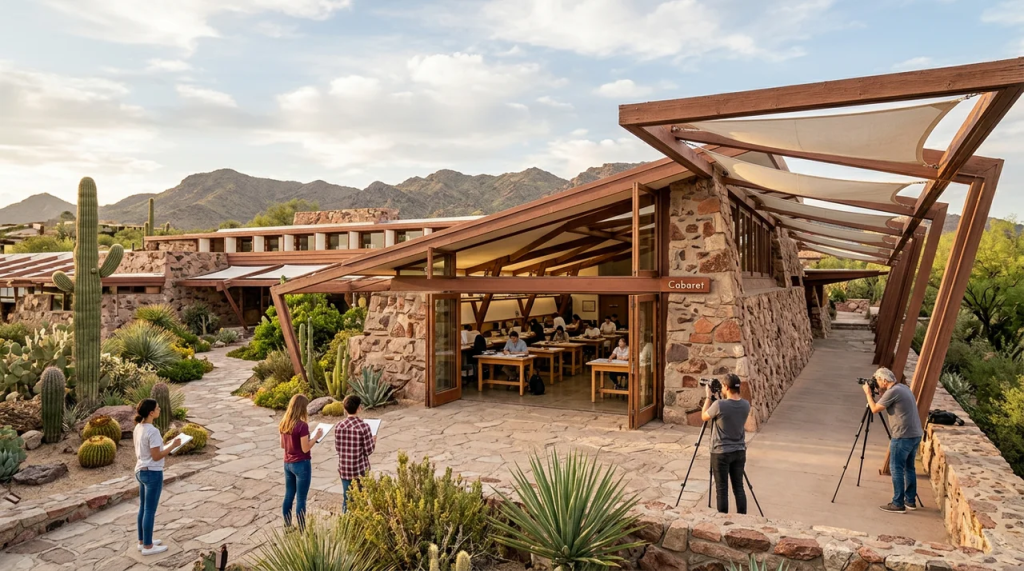
One of the most memorable parts of the visit is seeing how Wright design responds directly to the surrounding landscape.
Local stone, low rooflines, terraces, open-air passages, changing light, and views of the desert help connect the buildings with their setting. Wright used the site as an evolving experiment rather than treating it as a finished project.
Pay attention to how rooms open toward gardens and outdoor spaces. These details illustrate Wright’s approach to organic architecture and explain why the site feels closely tied to Arizona rather than separate from it.
Best for: designers, photographers, students, and creative travelers.
3. Step Inside Taliesin West’s Historic Core
The Historic Core gives visitors a closer look at the spaces where Wright and members of the Fellowship lived and worked.
Studios, gathering rooms, dining areas, terraces, offices, and residential spaces reveal how the property functioned as both a creative workplace and a house. Furniture, lighting, fireplaces, windows, and built-in details show how Wright considered the entire environment rather than focusing only on the exterior.
This part of Taliesin West is especially valuable for visitors who want to understand how daily life and creative work overlapped at the site.
Best for: history enthusiasts, interior-design fans, and visitors interested in Wright’s working process.
4. Learn the Taliesin History Behind the Fellowship
Understanding Taliesin history adds important context to the visit.
The property was not simply Wright’s seasonal residence. It also became a community where apprentices lived, studied, worked, and helped develop the site over many years. Their involvement shaped both the physical property and the educational philosophy associated with Taliesin.
A deeper experience may include stories about the Fellowship, preservation work, collections, and areas beyond the standard visitor route. A guided tour can be especially worthwhile for guests who want more historical detail.
Best for: repeat visitors, history lovers, students, and serious Wright enthusiasts.
5. Walk the Apprentice Shelter Route
The apprentice shelters reveal the experimental side of life at Taliesin.
Students and apprentices created small structures in the surrounding desert as hands-on exercises in materials, climate, space, and construction. Some shelters are simple, while others demonstrate surprisingly complex ideas.
The route usually involves uneven outdoor terrain, so comfortable shoes and appropriate clothing are important. Taking this route also offers a different perspective on the site, as the focus shifts from Wright’s main rooms to the people learning around him.
Best for: active visitors, architecture students, repeat guests, and travelers interested in experimental building.
6. Visit the Hillside Theater and Cultural Spaces
The Hillside Theater and other performance-oriented areas show how art, music, film, and community life became part of the Taliesin experience.
Wright did not treat the property only as a workplace. Cultural gatherings and performances helped shape daily life for members of the Fellowship and their guests.
Depending on current access and programming, visitors may encounter spaces associated with performances, lectures, exhibitions, or other creative activities. These areas add another layer to the site beyond its better-known rooms and desert views.
Best for: art lovers, culture-focused travelers, and visitors interested in the Fellowship lifestyle.
7. Attend a Public Evening Program
Before choosing your visit date, check the public program calendar.
Seasonal offerings can include music, performances, films, educational programs, and evening experiences. Taliesin West’s most popular evening program can vary by season, so checking the current schedule is the best way to see what is available during your trip.
The site can feel especially atmospheric later in the day as temperatures cool and changing light brings out the colors of the desert stone. Some programming may also be offered during spring, when outdoor conditions are often more comfortable.
Best for: couples, culture lovers, repeat visitors, and travelers looking for an evening experience.
Plan Your Visit Before You Go
Taliesin West is open on a seasonal schedule, with operating days and admission times changing throughout the year. Make sure to review current admission details before arriving. Tickets are limited, and the Frank Lloyd Wright Foundation strongly recommends advance reservations.
Search for current West tickets, operating hours, accessibility information, and seasonal programs before finalizing your plans. Comfortable footwear is helpful because portions of the property include gravel, steps, outdoor pathways, and uneven surfaces.
Visitors should also allow extra time before or after their scheduled entry rather than planning another activity immediately afterward. A relaxed schedule gives you more time to appreciate the desert surroundings and browse the museum store.
Because much of the experience involves walking indoors and outdoors, dress for the Arizona weather and wear comfortable shoes. Historic pathways can include concrete, gravel, shallow steps, and uneven surfaces. Visitors with mobility considerations should review current accessibility information before booking.
The property is located at 12621 N. Frank Lloyd Wright Boulevard. If you are staying several days and want a private home base for exploring the surrounding area, browse Scottsdale vacation rentals from Paradiso and compare properties based on your group size, preferred amenities, and planned itinerary.
Frequently Asked Questions
How long should you spend at Taliesin West?
Most first-time visitors should allow at least 60–75 minutes for the main experience, plus extra time for arrival and browsing. Specialized seasonal programs can run 90 minutes or more, while the Behind-the-Scenes option lasts roughly two to two-and-a-half hours.
Do you need reservations in advance?
Advance reservations are strongly recommended because ticket capacity is limited. This is particularly important if you have a specific date or specialized program in mind.
Why is the property historically important?
Established in 1937, the site became Wright’s winter home, workspace, and experimental architectural environment. It is now a National Historic Landmark and part of UNESCO’s World Heritage property, The 20th-Century Architecture of Frank Lloyd Wright.
Is the experience worthwhile if you are not an architect?
Yes. Visitors can appreciate the desert scenery, history, interiors, craftsmanship, cultural programming, and the relationship between buildings and nature without an architecture background.
What is the best option for a first visit?
The Foundation recommends beginning with its main self-paced experience through the Historic Core. It offers access to Wright’s living and working spaces and provides the most complete introduction before trying specialized hikes or behind-the-scenes programming.
Is Taliesin worth visiting if you are not familiar with Frank Lloyd Wright?
Yes. The property combines history, landscape, interiors, art, and storytelling in a way that can appeal even to visitors with no prior knowledge of Wright.
What should you wear during a visit?
Choose comfortable shoes and clothing suited to desert conditions. Part of the experience takes place outdoors, and surfaces can include gravel and uneven pathways.
Where should you stay when visiting?
A central home base makes it easier to combine Taliesin with restaurants, hiking, shopping, golf, and other attractions. Families and groups can browse Scottsdale vacation rentals on Paradiso to compare private homes by group size, location, and amenities.