


Guide to Asheville’s River Arts District: Things to See & Do
By: Adam Jerold Cansino | November 11, 2026
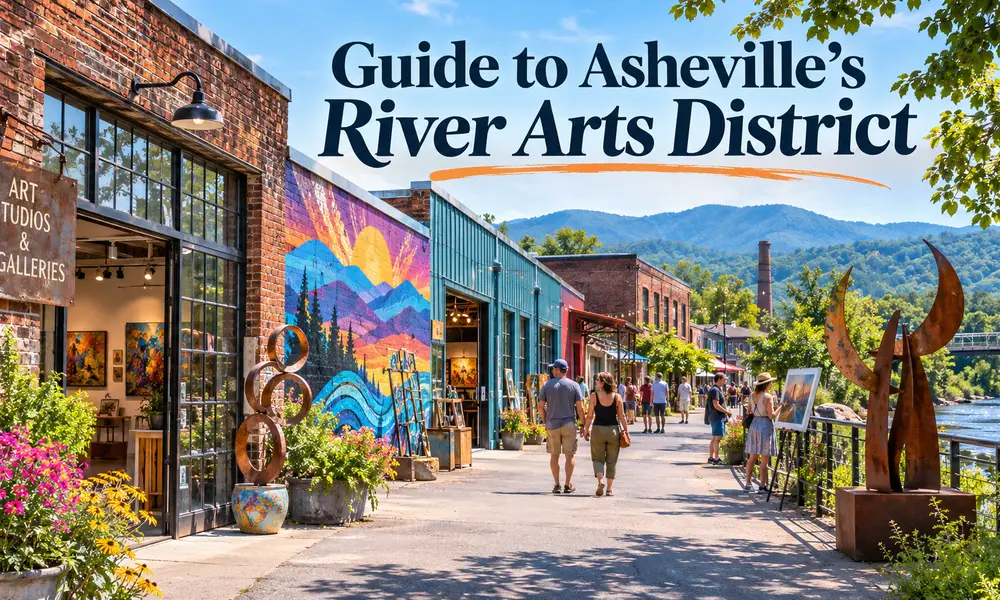
Asheville’s River Arts District is one of the city’s most distinctive cultural destinations, offering working artist studios, creative workshops, colorful murals, and independently operated galleries.
Located along the French Broad River southwest of downtown Asheville, this former industrial neighborhood gives visitors opportunities to meet local artists, watch demonstrations, and discover original paintings, ceramics, jewelry, sculpture, and handcrafted goods.
The River Arts District is welcoming visitors again following Hurricane Helene in September 2024, although some buildings and riverside routes remain closed or are undergoing reconstruction.
Whether you’re interested in collecting original artwork, photographing murals, or spending an afternoon watching artists create, this guide covers the best places to visit, what has reopened, and how to plan your experience.
For additional attractions throughout the region, see our guide on the 15 best things to do in Asheville, NC.
What Is the River Arts District in Asheville?
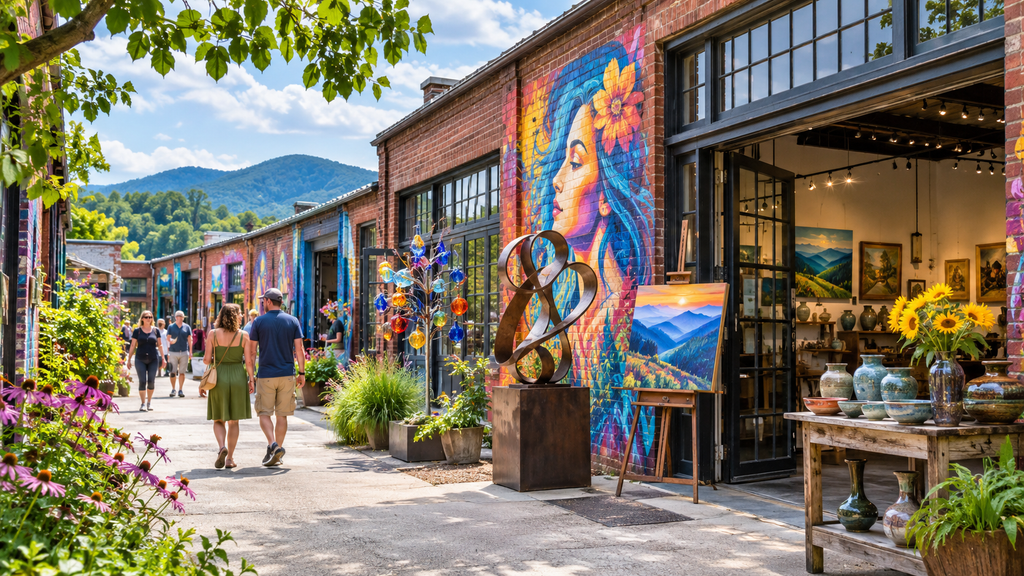
The River Arts District is a creative neighborhood where former factories, warehouses, and industrial buildings have been transformed into spaces for art production, exhibitions, workshops, and cultural experiences.
Unlike traditional museums, many establishments include studios where visitors can watch professional artists work on their latest projects.
The district features a wide variety of creative disciplines, including:
- Painting, drawing, and contemporary art
- Ceramics, pottery, and sculpture
- Glassblowing and glassmaking
- Jewelry design and metalworking
- Woodworking and handcrafted furniture
- Photography, textiles, and mixed media
The River Arts District Artists association represents a substantial network of local makers. Its visitor information lists more than 550 participating artists, though locations and individual schedules can change.
Many artists work independently, sharing exhibition buildings or maintaining private spaces that open for scheduled visits.
This working environment makes the arts district especially appealing to travelers who want to see how objects are created rather than viewing finished pieces alone.
Is the River Arts District Open After Hurricane Helene?
Yes, much of the River Arts District is open to visitors, but recovery continues following the destructive flooding caused by Hurricane Helene in September 2024.
The storm damaged studios, equipment, exhibition spaces, and businesses along the river. Hundreds of artists were affected, with some relocating to temporary workplaces or rebuilding their original properties.
Today, visitors can find operating studios, restaurants, breweries, and creative businesses across several parts of the neighborhood.
However, reopening is not uniform. Some buildings remain closed, and construction can affect nearby streets, parking areas, and walking routes.
Confirmed visitor destinations include Trackside Studios, Pink Dog Creative, Wedge Studios, the North Carolina Glass Center, and Marquee.
Riverview Station continues to report a closure on its official website, so it should not be treated as a guaranteed public stop until reopening is confirmed.
Planning tip: Consult the official River Arts District website and individual business websites before traveling. Recent photographs, older map listings, and historical opening hours may not reflect current conditions.
Best Galleries and Artist Studios to Visit
The neighborhood contains a mixture of shared exhibition spaces, independently operated studios, and creative centers.
Rather than attempting to visit every building, choose a few locations based on your interests and allow time to speak with the artists.
1. Trackside Studios: Meet Local Artists on Depot Street
Location: 375 Depot Street, Asheville, NC
Admission: Free to browse; classes may cost extra
Best for: First-time visitors, collectors, and creative workshops
Suggested time: 45–60 minutes
Trackside Studios is an accessible starting point for exploring the neighborhood’s creative variety.
Located in a former industrial building beside the railroad tracks, the space combines working studios with exhibition areas featuring paintings, jewelry, ceramics, photography, sculpture, and mixed-media pieces.
Visitors can encounter work by approximately 60 local artists. The arrangement allows guests to compare multiple artistic styles without traveling between separate buildings.
One of its most appealing features is the opportunity to interact with participating makers. Depending on who is present, guests may learn about painting techniques, materials, artistic inspiration, or the process behind particular pieces.
Trackside also organizes workshops and creative activities for people who want a more hands-on experience.
Its official website currently lists daily public hours of 11 a.m. to 5 p.m., except for major holidays or severe weather.
Planning tip: Check the current exhibition and class schedule before visiting. Individual artists may not be present throughout every public opening period.
2. Pink Dog Creative: Discover a Colorful Arts Community
Location: 342–348 Depot Street, Asheville, NC
Admission: Free to browse
Best for: Art enthusiasts, photography, and handmade gifts
Suggested time: 30–60 minutes
Pink Dog Creative is recognized for its colorful exterior and collection of independently operated creative spaces.
The building includes studios occupied by artists working across different media, making it a worthwhile stop for travelers interested in exploring a range of artistic approaches.
Visitors may encounter jewelry, paintings, decorative objects, sculpture, and imaginative mixed-media creations.
The surrounding Depot Street corridor also offers opportunities to appreciate the district’s industrial architecture and painted exterior walls.
Pink Dog Creative provides an interesting example of how older commercial buildings have become shared spaces for creative businesses.
Its atmosphere is particularly appealing to visitors who enjoy speaking directly with makers and learning the stories behind their work.
Planning tip: The building is listed as open, but individual studio hours vary. Confirm access to any particular artist before making a special trip.
3. Wedge Studios: Experience Art Inside a Former Industrial Building
Location: Roberts Street, Asheville, NC
Admission: Free to browse participating open spaces
Best for: Working studios, industrial architecture, and local creativity
Suggested time: 30–45 minutes
Wedge Studios brings together professional artists within a multilevel former industrial building.
The property contains working spaces for more than 30 artists, with disciplines including painting, sculpture, illustration, and other creative practices.
Its industrial character offers a different experience from a conventional white-walled exhibition space. Visitors encounter spaces where artists experiment, develop ideas, and prepare finished pieces.
A visit can also provide a glimpse into the collaborative relationships that help sustain the neighborhood’s creative economy.
Wedge Brewing operates in the surrounding building complex, making this part of the neighborhood useful for combining cultural sightseeing with a casual refreshment stop.
The studios do not provide regular guided building tours, and individual businesses maintain their own schedules.
Planning tip: Use the artists’ official directory to identify open workspaces rather than assuming the entire building is accessible.
4. Marquee: Browse Contemporary Art and Vintage Design
Location: 36 Foundy Street, Asheville, NC
Admission: Free to browse
Best for: Art collectors, vintage décor, and unusual finds
Suggested time: 30–60 minutes
Marquee is a creative retail destination that combines original artwork, antiques, decorative pieces, vintage furnishings, and handcrafted products.
Unlike a single-artist gallery, it offers a curated selection of objects with different visual styles, materials, and purposes.
Visitors can browse paintings and sculptures alongside furniture, jewelry, and distinctive design pieces.
This mix makes Marquee especially appealing to travelers looking for something memorable to take home from Asheville.
The Foundy Street setting also offers a chance to experience a neighborhood that blends former industrial architecture with contemporary businesses.
For visitors unfamiliar with the local creative scene, Marquee can be an approachable introduction to the variety of work available throughout the district.
Planning tip: Allow time to browse, but confirm current business hours directly before visiting, particularly around holidays or special events.
Watch Artists at Work at the North Carolina Glass Center
Location: 140C Roberts Street, Asheville, NC
Admission: Gallery access and observation opportunities; paid workshops
Best for: Families, couples, and hands-on learning
Suggested time: 45–90 minutes
The North Carolina Glass Center offers one of the most memorable creative experiences in the River Arts District.
The nonprofit facility offers glassmaking education, artist demonstrations, exhibition spaces, and opportunities for visitors to join guided workshops.
Guests can watch glass artists shape heated materials, work with specialized equipment, and transform glass into decorative or functional objects.
Depending on the schedule, visitors can also arrange hands-on experiences involving techniques such as flame working and furnace glassmaking.
A workshop offers a different perspective from browsing finished artwork. Participants can appreciate the patience, precision, and technical skills required to produce handmade glass objects.
The center’s Asheville facility includes a hot shop, flame shop, and exhibition gallery.
Its official website lists public hours from Wednesday through Monday, with Tuesday closures. Friday and Saturday have extended hours compared with most other days.
Planning tip: Reserve classes in advance, especially on weekends. Confirm demonstration availability because normal gallery hours do not guarantee that a particular activity will be running.
Explore River Arts Murals and Outdoor Installations
Some of the neighborhood’s most recognizable creative works are displayed outside rather than inside buildings.
Painted walls, sculptures, and other installations introduce visitors to the district’s artistic identity before they enter a single studio.
Depot Street and the surrounding creative corridors are especially useful places to look for colorful exterior artwork.
Visitors may notice abstract compositions, large-scale illustrations, decorated building entrances, and sculptures that reflect the character of the surrounding industrial properties.
The neighborhood’s outdoor artwork is not static. As artists develop new projects and damaged properties undergo repairs, individual pieces can change or disappear.
For photography, daylight generally makes it easier to capture architectural details and exterior murals without additional lighting.
Remember that many buildings are active workplaces. Avoid entering private construction sites, blocking studio entrances, or photographing artists inside without permission.
Planning tip: Use the official outdoor art directory for background, while recognizing that older listed installations may have changed after the flood.
Take an Art Class or Creative Workshop
For travelers who want to participate rather than simply observe, the neighborhood offers opportunities to learn directly from experienced makers.
Classes may introduce visitors to painting, pottery, printmaking, jewelry design, glassmaking, and other artistic disciplines.
Workshops vary considerably in duration, difficulty, and age requirements.
Some are designed for beginners who want to complete a simple project, while others involve more advanced techniques and specialized equipment.
A short creative session can be particularly appealing for couples, small groups, and families seeking a distinctive Asheville experience.
The North Carolina Glass Center and Trackside Studios are useful places to begin researching workshop availability.
Before booking, review the activity description to determine whether materials are included, whether participants can take their finished projects home immediately, and whether work must cool or be fired before collection.
Planning tip: Book the activity first, then plan nearby sightseeing around its scheduled start time.
Visit the Arts District During Second Saturday Events
The monthly Second Saturday Stroll is one of the best opportunities to experience multiple participating studios during a single visit.
These events bring together artists, exhibitions, demonstrations, open studios, and occasional special programming.
Visitors may encounter makers discussing their techniques, showcasing new collections, or presenting artwork that is not ordinarily displayed.
Depending on the schedule, participating venues can also organize workshops, outdoor markets, and live music.
The stroll is particularly useful for travelers who prefer a lively atmosphere and opportunities to interact with multiple artists.
Published event listings for late 2026 include November 14 and December 12, with programming generally scheduled from 10 a.m. to 5 p.m.
However, individual venues may have different hours, and specific activities vary by date.
Planning tip: Check the official event calendar for confirmed programming before planning an itinerary around a particular Second Saturday.
Walk Along the French Broad River Greenway
The neighborhood’s riverside location provides opportunities to combine cultural sightseeing with time outdoors.
The Wilma Dykeman Greenway runs through the River Arts District and features paved sections, river views, benches, and public artwork.
The surrounding route offers a change of scenery after visiting indoor studios and exhibition spaces.
However, visitors should not assume every riverside path is currently available.
Following Hurricane Helene, several riverfront facilities required extensive repairs. Additional infrastructure construction has also affected routes near Lyman Street.
As of the city’s October 2026 updates, the French Broad River Park segment remains closed. Separate utility work has also required temporary detours along sections of the Wilma Dykeman Greenway.
Travelers can still enjoy available portions of the riverfront, but the safest approach is to choose a confirmed open segment rather than planning an uninterrupted loop.
Planning tip: Review the City of Asheville’s Wilma Dykeman Greenway information and posted detours before walking or cycling.
Where to Eat, Drink, and Relax Between Studio Visits
The River Arts District has developed into more than a collection of art spaces.
Visitors can find independently operated restaurants, cafés, breweries, and gathering places that make it possible to spend several hours in the neighborhood.
A meal or refreshment break can also give you time to reflect on the different artistic styles you encounter during the day.
Options worth checking include:
- Ultra Coffeebar: A coffee stop for beginning a studio visit or taking a midmorning break.
- Wedge Brewing: A neighborhood brewery associated with the district’s historic industrial properties.
- Baby Bull: A casual dining choice known for burgers.
- All Souls Pizza: A relaxed pizza option near the creative corridors.
Wedge Brewing’s Foundy Street location has announced its reopening following Helene, reflecting ongoing recovery within the neighborhood.
Because the operating status of individual businesses can change, confirm each establishment’s current schedule rather than assuming every historical restaurant or taproom remains available.
Planning tip: Choose a dining location near the studios you intend to visit. The district spans several corridors, so not every restaurant is a short walk from every creative building.
How to Get to the River Arts District and Find Parking
The district is located southwest of downtown Asheville, along the eastern side of the French Broad River.
Visitors generally reach the neighborhood by car, rideshare, bicycle, or a combination of transportation and walking.
Some key streets include Roberts Street, Depot Street, Clingman Avenue, Lyman Street, and Foundy Street.
Parking and Getting Around
Free public parking is available in various parts of the district, including some designated lots and on-street locations.
However, parking availability depends on the building, time of day, and any active construction restrictions.
A useful strategy is to choose a primary studio cluster, park nearby, and visit several locations on foot before moving to another part of the neighborhood.
For example, travelers interested in Depot Street can concentrate on Trackside Studios and Pink Dog Creative.
Visitors interested in glassmaking and industrial studios may prefer the Roberts Street section.
The district is not a single enclosed attraction. Streets, sidewalks, crossings, and building entrances vary, and visitors should plan accordingly.
Those with mobility considerations should contact specific venues about accessible entrances, parking, and restroom facilities.
Planning tip: Download the current River Arts District visitor map and check local road restrictions before traveling.
A Half-Day River Arts District Itinerary
A half-day visit provides enough time to appreciate several creative spaces without feeling rushed.
The following itinerary focuses on a manageable selection of attractions rather than attempting to visit the entire neighborhood.
11:00 a.m. — Begin on Depot Street
Start at Trackside Studios and browse its selection of original artwork. Continue to Pink Dog Creative to discover additional makers and artistic styles.
12:15 p.m. — Enjoy lunch
Choose a nearby restaurant and allow time for a relaxed meal before continuing.
1:15 p.m. — Visit Roberts Street
Travel to the North Carolina Glass Center for gallery browsing or a scheduled demonstration. If you’ve booked a workshop, adjust the itinerary around its starting time.
2:30 p.m. — Explore Foundy Street
Browse Marquee for original artwork, vintage objects, and locally made decorative pieces.
3:15 p.m. — Finish with an outdoor stop
If conditions permit, photograph nearby murals or enjoy an accessible, open section of the riverside greenway.
This itinerary works best when the selected studios are open, and no activity requires a fixed reservation.
Travelers with additional time can extend the visit with a longer class, more galleries, or a neighborhood event.
Where to Stay Near Asheville’s River Arts District
A visit to the district fits naturally into a longer vacation focused on Asheville’s museums, mountain scenery, restaurants, and outdoor attractions.
Travelers who want additional space and residential amenities may prefer vacation accommodation in the surrounding region rather than a traditional downtown hotel.
Paradiso Homes offers Asheville vacation rentals for visitors considering a more spacious base for their western North Carolina trip.
Depending on the individual property, accommodations may provide amenities such as private kitchens, outdoor gathering spaces, mountain views, and room for larger traveling groups.
These properties are marketed for the Asheville area; travelers should verify the specific address, location, amenities, and driving route before booking rather than assuming a property is located within Asheville city limits.
Combining a district visit with other local attractions can create a balanced itinerary that includes creative experiences, restaurants, historic landmarks, and mountain scenery.
Plan Your Asheville Arts Experience
The River Arts District offers a distinctive opportunity to experience Asheville through its creative people, restored industrial buildings, and working studios.
From browsing original paintings to watching glassmaking demonstrations and discovering colorful outdoor murals, visitors can build an itinerary that reflects their personal interests.
Although storm recovery continues, many artists and businesses are welcoming visitors and contributing to the neighborhood’s next chapter.
For travelers spending several days in the region, the district makes an excellent addition to a broader itinerary of cultural attractions, mountain experiences, and locally owned businesses.
Frequently Asked Questions
Is Asheville’s River Arts District worth visiting?
Yes. The River Arts District is particularly worthwhile for travelers interested in original artwork, working studios, architecture, and opportunities to meet professional artists.
Highlights include:
- Browsing independently operated art spaces
- Watching creative demonstrations
- Discovering murals and sculptures
- Participating in hands-on workshops
- Supporting locally operated creative businesses
Allow at least two to three hours for an introductory visit, or longer if you plan to attend a workshop or special event.
Is the River Arts District free to visit?
Walking through the neighborhood and entering many publicly accessible studios and galleries is generally free.
Costs depend on the experience:
- Gallery browsing is often complimentary.
- Workshops usually require paid registration.
- Original artwork and handmade products are individually priced.
- Special activities may have separate admission charges.
Visitors can enjoy a substantial portion of the neighborhood without purchasing artwork, though buying directly from local makers supports their businesses.
How much time should you spend in the River Arts District?
Most first-time visitors should plan approximately two to four hours, depending on their interests.
A practical schedule might include:
- 30–60 minutes in a major studio building
- 30–60 minutes visiting additional artists
- 45–60 minutes for lunch or refreshments
- 30–90 minutes for murals, walking, or a creative demonstration
A longer visit makes sense for anyone attending a class, collecting artwork, or participating in a Second Saturday event.
Can you visit the River Arts District after Hurricane Helene?
Yes, many creative businesses have reopened, but access varies across the district.
Before visiting:
- Confirm that your selected studios are operating.
- Check individual business hours.
- Review construction-related road and greenway restrictions.
- Avoid buildings that have not officially reopened.
The most rewarding approach is to support operating businesses while respecting ongoing recovery work.