


15 Best Things to Do in Downtown Asheville: Downtown Asheville Art District, Grove Arcade, & More

By: Adam Jerold Cansino | November 11, 2026
Downtown Asheville, North Carolina, offers an impressive mix of historic architecture, art museums, independent shops, music venues, and memorable dining experiences. Its compact streets make it easy to explore several attractions without spending the entire day driving.
Top activities include following the Asheville Urban Trail, exploring Grove Arcade, visiting the Asheville Art Museum, playing vintage games at the Asheville Pinball Museum, and discovering historic landmarks around Pack Square.
Whether you’re planning a romantic weekend, a family outing, or your first visit to the Blue Ridge Mountains, the city center offers something for nearly every traveler.
This guide highlights 15 worthwhile stops, with practical information about locations, admission, accessibility considerations, and planning your visit.
For additional mountain adventures and destinations beyond the city center, see our guide to the 15 best things to do in Asheville, NC.
15 Downtown Asheville Attractions Worth Exploring
1. Follow the Asheville Urban Trail
Location: Throughout central Asheville, beginning near Pack Square
Admission: Free
Best for: History enthusiasts, first-time visitors, and couples
Suggested time: 1–2 hours
The Asheville Urban Trail is one of the most rewarding ways to discover the city’s history on foot.
This approximately 1.7-mile self-guided tour connects 30 sculptural stations that reveal important stories about Asheville’s architecture, cultural development, and influential residents.
Unlike a traditional museum, the Urban Trail takes visitors directly into the streets where much of the city’s history unfolded.
Along the route, you’ll encounter sculptures, historical plaques, and buildings associated with figures such as George Vanderbilt, Thomas Wolfe, and architect Douglas Ellington.
The trail also passes shops, public gathering spaces, and architectural landmarks, making it easy to combine sightseeing with other activities.
Visitors can complete the full route or explore individual sections based on their interests and available time.
Planning tip: Begin near the “Walk Into History” marker at Pack Square and use the official Urban Trail map to follow the stations.
2. Explore Pack Square Park
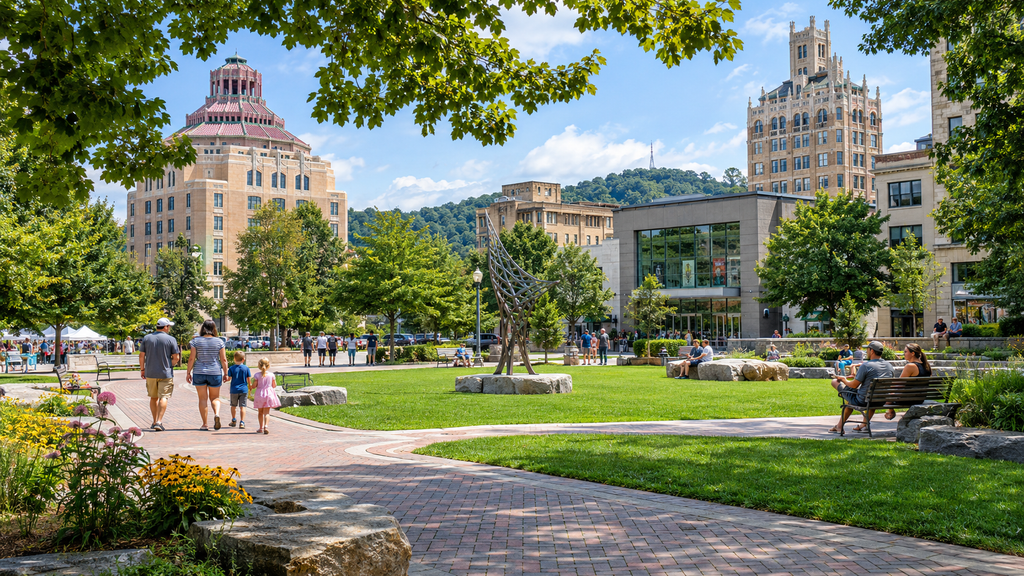
Location: 80 Court Plaza, Asheville, NC
Admission: Free
Best for: Families, casual sightseeing, and photography
Suggested time: 30–60 minutes
Pack Square Park serves as one of the main gathering places in central Asheville.
Located near the Asheville Art Museum and several prominent civic landmarks, the park provides a convenient starting point for exploring the surrounding streets.
Visitors will find paved walkways, landscaped gathering areas, public art, benches, and open spaces that offer a pleasant break between sightseeing stops.
The park also contains Splasheville, a seasonal splash pad that can be particularly appealing to families during warmer weather.
Throughout the year, the surrounding area may host cultural activities and public gatherings, although individual schedules vary.
Pack Square is especially useful for visitors who want to get oriented before exploring nearby museums, historic buildings, and shopping streets.
Planning tip: Check the City of Asheville’s park updates before planning around the splash pad or a scheduled public event.
3. Visit the Asheville Art Museum
Location: 2 South Pack Square, Asheville, NC
Admission: Ticketed; discounts and free-admission categories available
Best for: Art lovers, couples, and rainy-day activities
Suggested time: 1–2 hours
The Asheville Art Museum is one of the city’s most significant cultural attractions.
Its exhibitions emphasize American art from the 20th and 21st centuries, with collections and rotating displays exploring different artistic movements, materials, and perspectives.
Inside, visitors can discover paintings, sculpture, contemporary works, and pieces that reflect the region’s creative heritage.
The museum also features educational programming and interactive opportunities that make the visit engaging for families.
Its central location allows travelers to combine a museum visit with nearby historic buildings, public art, and a walk around Pack Square.
For visitors who enjoy exploring cultural institutions, the Asheville Art Museum provides a more focused experience than simply browsing the city’s streets.
Planning tip: The museum currently lists Wednesday through Sunday opening days and closes on Mondays and Tuesdays. Review current exhibitions and admission options before visiting.
4. Discover Historic Grove Arcade
Location: 1 Page Avenue, Asheville, NC
Admission: Free to enter
Best for: Shopping, architecture, and casual dining
Suggested time: 45–90 minutes
Grove Arcade is one of Asheville’s most recognizable architectural landmarks.
Completed in 1928, this historic commercial building combines distinctive architectural details with boutiques, specialty retailers, and dining establishments.
Inside, visitors can admire the building’s decorative interiors while browsing independent shops selling jewelry, clothing, gifts, and handcrafted products.
The surrounding Makers Market provides another opportunity to discover work from regional artisans.
Grove Arcade is particularly appealing because it offers more than a conventional shopping experience. The building itself tells a story about Asheville’s growth and architectural ambitions during the early 20th century.
Visitors can explore the shops, enjoy a meal, or simply appreciate the atmosphere.
Planning tip: The building generally opens daily, but individual merchant schedules differ. Check specific businesses if you plan to visit one particular shop.
5. Play at the Asheville Pinball Museum
Location: 1 Battle Square, Asheville, NC
Admission: Paid admission
Best for: Families, nostalgic travelers, and indoor entertainment
Suggested time: 1–2 hours
The Asheville Pinball Museum offers an interactive alternative to traditional sightseeing.
Rather than displaying vintage machines behind glass, the museum allows visitors to play its collection of classic pinball machines and arcade games.
The attraction features about 40 pinball machines and 40 classic video games, bringing decades of gaming history together in one location.
Visitors can explore different styles of machines, compete with friends, and discover games they may remember from childhood.
The museum is especially attractive for groups with different ages because everyone can participate at their own pace.
It also provides an enjoyable indoor option when mountain weather makes outdoor sightseeing less appealing.
Planning tip: The museum operates on a first-come, first-served basis and limits the number of players inside. Arriving earlier can help reduce waiting time, especially on weekends and rainy days.
6. Admire the Basilica of Saint Lawrence
Location: 97 Haywood Street, Asheville, NC
Admission: Exterior viewing is free; interior access varies
Best for: Architecture enthusiasts, history lovers, and photographers
Suggested time: 15–45 minutes
The Basilica of Saint Lawrence is among Asheville’s most distinctive historic buildings.
Known for its Spanish Renaissance Revival architecture, the basilica features detailed brickwork, decorative elements, and an extraordinary domed interior.
The church was designed by Rafael Guastavino, whose innovative tile-vaulting techniques contributed to its architectural significance.
Even from outside, the basilica offers an impressive contrast to the surrounding commercial buildings.
For travelers interested in architectural history, it offers a chance to appreciate craftsmanship that differs from the Art Deco and early commercial structures found elsewhere in the city.
Interior access can be affected by religious services, restoration work, and visitor schedules.
Planning tip: Confirm current visitor access directly with the basilica before planning an interior visit. Exterior appreciation is a worthwhile alternative when the building is unavailable for sightseeing.
7. Visit the Thomas Wolfe Memorial
Location: 52 North Market Street, Asheville, NC
Admission: Free visitor-center admission; paid guided house tours
Best for: Literature enthusiasts and history lovers
Suggested time: 45–90 minutes
The Thomas Wolfe Memorial preserves the childhood home of one of North Carolina’s most influential writers.
The historic boardinghouse, known as Old Kentucky Home, played an important role in Wolfe’s upbringing and later inspired settings in his autobiographical novel Look Homeward, Angel.
Visitors can explore exhibits about Wolfe’s life, literary career, and the Asheville community during the early 20th century.
Guided house tours provide additional insight into how the boardinghouse operated and how its residents influenced Wolfe’s writing.
Original furnishings and historic details help visitors imagine daily life during that period.
The memorial is an excellent addition to an Asheville sightseeing itinerary because it combines literary history with the city’s development as a mountain destination.
Planning tip: The memorial generally operates Tuesday through Saturday, excluding designated holidays. Guided house tours have scheduled departure times, and repair work may continue even while the site is open.
8. Shop at Woolworth Walk and Downtown Art Galleries
Location: Haywood Street and surrounding blocks
Admission: Free to browse
Best for: Art collectors, creative travelers, and souvenir shopping
Suggested time: 45–90 minutes
Asheville’s creative reputation is visible throughout its downtown galleries and artist-focused businesses.
Woolworth Walk is a particularly interesting stop because it occupies a historic five-and-dime building transformed into a space for regional artwork.
Visitors can browse paintings, photography, pottery, jewelry, and other pieces created by artists working in Western North Carolina.
The building also retains a nostalgic soda-fountain atmosphere, adding another layer to the visit.
Nearby galleries offer opportunities to discover different artistic styles, from contemporary painting to handcrafted decorative objects.
This is a worthwhile activity for travelers who prefer independent shops and meaningful souvenirs over conventional retail stores.
Planning tip: Allow additional time to explore side streets. Gallery hours and exhibition schedules can vary, particularly around holidays.
9. Browse Malaprop’s Bookstore and Café
Location: 55 Haywood Street, Asheville, NC
Admission: Free to browse
Best for: Book lovers, solo travelers, and relaxed afternoons
Suggested time: 30–60 minutes
Malaprop’s Bookstore is a well-known independent bookstore that reflects Asheville’s literary and creative character.
Its shelves feature fiction, nonfiction, regional writing, children’s books, and publications covering a wide range of subjects.
Visitors can browse new releases, discover local authors, or search for a book to enjoy during their mountain getaway.
The bookstore has also long served as a gathering place for readers and writers, hosting literary programming and author-related activities.
Its atmosphere makes it an appealing stop for travelers who want a slower-paced break between museums and outdoor sightseeing.
A bookstore visit also pairs naturally with exploring the nearby shops and historic buildings along Haywood Street.
Planning tip: Check the bookstore’s current calendar for author appearances and special programming.
10. Discover the South Slope Brewery District
Location: South Slope neighborhood, south of the central business district
Admission: Free to explore; beverages and food purchased separately
Best for: Couples, groups of friends, and craft beer enthusiasts
Suggested time: 1–3 hours
Asheville’s South Slope neighborhood has become an important part of the city’s craft beverage culture.
Located near the main commercial streets, the district concentrates breweries and casual gathering spaces within a relatively walkable area.
Well-known names associated with the neighborhood include Burial Beer Co. and Green Man Brewery.
Visitors can compare different brewing styles, discover seasonal selections, and enjoy the informal atmosphere of Asheville’s beer scene.
Some locations provide outdoor seating or food options, making the neighborhood suitable for a relaxed afternoon or evening.
South Slope also offers a different perspective on Asheville, with former industrial and commercial spaces contributing to the district’s character.
Planning tip: Check individual brewery hours, food availability, and age policies before visiting. Designate a driver or arrange transportation if your plans include multiple tastings.
11. Catch Live Music at the Orange Peel
Location: 101 Biltmore Avenue, Asheville, NC
Admission: Ticket prices vary by performance
Best for: Music enthusiasts, couples, and evening outings
Suggested time: 2–3 hours
The Orange Peel is one of Asheville’s best-known music and entertainment venues.
Located along Biltmore Avenue, the venue hosts touring musicians, comedians, and other live performances year-round.
Its concert schedule spans different genres, giving visitors opportunities to discover emerging performers alongside established acts.
A performance at the Orange Peel provides an energetic contrast to daytime activities such as museum visits and historic walking routes.
Travelers can also combine an evening show with dining at nearby establishments.
Because the performance calendar changes frequently, the experience will depend on the artists and shows scheduled during your visit.
Planning tip: Review the official event calendar before purchasing tickets. Check the individual show’s age restrictions, seating arrangement, and door times.
12. Explore Wall Street and Historic Architecture
Location: Wall Street and surrounding downtown blocks
Admission: Free
Best for: Couples, casual walkers, and architecture enthusiasts
Suggested time: 30–60 minutes
Wall Street is one of the most charming streets in central Asheville.
Its curved layout, brick streetscape, and historic commercial buildings make it particularly enjoyable for travelers who appreciate urban design.
The surrounding blocks reveal notable architectural styles, including Art Deco details, early 20th-century storefronts, and decorative building façades.
Visitors can stroll along the street, admire architectural features, and explore nearby businesses.
The Flatiron Building is another recognizable landmark in this part of the city, known for its distinctive shape and place in Asheville’s architectural history.
For visitors interested in photography, this area offers opportunities to capture the city’s character without traveling far from its main attractions.
Planning tip: Explore on foot and look above storefront level to notice decorative architectural details that are easy to miss.
13. Experience Pritchard Park and Street Performers
Location: Pritchard Park, near Patton Avenue
Admission: Free
Best for: Budget travelers, music lovers, and people-watching
Suggested time: 20–45 minutes
Pritchard Park is a small public gathering space that reflects Asheville’s informal and creative atmosphere.
The park is especially known for its community drum circle, a long-running tradition that brings musicians and spectators together during warmer months.
Street performers can also be found around other parts of the city, adding music and entertainment to the pedestrian experience.
A visit provides an opportunity to observe Asheville’s community culture without purchasing a ticket or committing to a scheduled attraction.
The surrounding streets contain shops and dining establishments, making the park a convenient stop during a broader walking itinerary.
Although the drum circle is an important tradition, specific gatherings depend on weather, season, and community participation.
Planning tip: Check current community announcements rather than assuming a drum circle or particular street performance will occur on a specific date.
14. Take the Family to the Asheville Museum of Science
Location: 43 Patton Avenue, Asheville, NC
Admission: Paid admission; selected discounts available
Best for: Families with children and educational outings
Suggested time: 1–2 hours
The Asheville Museum of Science, commonly known as AMOS, provides hands-on learning opportunities in the city center.
Its exhibits introduce visitors to scientific ideas through interactive activities, educational displays, and discoveries connected to the natural world.
The museum is especially useful for families looking for an engaging indoor activity that lets children explore rather than simply observe exhibits.
Depending on the current exhibition schedule, visitors may encounter activities related to geology, natural history, physics, and other scientific subjects.
AMOS can be combined with nearby shops, museums, and casual dining options for a balanced family outing.
It is also an appealing alternative when rainy weather changes outdoor plans.
Planning tip: The museum lists Tuesday as its regular closure day. Check the current operating schedule and reserve admission in advance during busy periods.
15. Enjoy Asheville’s Restaurants and Dining Scene
Location: Biltmore Avenue, Lexington Avenue, Pack Square, and surrounding streets
Admission: Varies by establishment
Best for: Food lovers, couples, and groups
Suggested time: 1–2 hours
Exploring Asheville’s dining scene is an essential part of experiencing the city’s culture.
The central business district contains a wide variety of restaurants, from casual cafés and bakeries to established dining rooms offering creative regional cuisine.
Many establishments emphasize ingredients and culinary influences associated with Western North Carolina and the broader Appalachian region.
Visitors can build a memorable outing around brunch, a leisurely lunch, or dinner before an evening performance.
Several dining areas are conveniently located near museums, shops, and entertainment venues, making it practical to combine meals with sightseeing.
Because restaurant schedules, menus, and reservation policies change, it is worth researching individual establishments rather than relying on a fixed dining plan.
Planning tip: Weekend dining can be particularly popular. Confirm opening hours and reservation availability before organizing your itinerary.
How to Spend One Day in Downtown Asheville
Asheville’s central attractions are close enough that visitors can enjoy a varied itinerary without spending much of the day in a vehicle.
A relaxed schedule allows time for historic landmarks, museums, shopping, and evening entertainment.
Morning: Historic Streets and Cultural Landmarks
Begin your day near Pack Square Park.
Explore the surrounding architecture before following part of the Asheville Urban Trail. The sculptures and historical markers provide helpful context about how the city developed.
Continue toward the Asheville Art Museum if you’re interested in contemporary and historic artwork, or visit the Thomas Wolfe Memorial for literary history.
Pause for breakfast or a casual meal at a nearby establishment.
Afternoon: Shopping, Art, and Interactive Attractions
Head toward Grove Arcade to browse specialty stores and admire the historic building.
Continue along Haywood Street to discover Malaprop’s Bookstore, galleries, and the Asheville Pinball Museum.
Families may prefer to substitute the Asheville Museum of Science for some of the shopping stops.
Keep your schedule flexible enough to enjoy unexpected discoveries along the way.
Evening: Dining, Breweries, and Entertainment
Spend the evening exploring the South Slope or enjoying dinner near Biltmore Avenue.
For travelers who enjoy performances, check whether the Orange Peel or another nearby venue has a show scheduled.
Even without a concert reservation, the combination of historic streets, casual dining, and cultural activity makes the city center an enjoyable evening destination.
More Places to Explore Beyond Downtown
Although the central district contains plenty of activities, several major regional destinations require additional transportation.
The Biltmore Estate is outside the central business district and offers mansion tours, gardens, and extensive grounds.
The River Arts District, located along the French Broad River, is a separate neighborhood with artist studios, galleries, and workshops. The area continues to evolve following the flooding caused by Hurricane Helene in September 2024, so individual business access should be checked before visiting.
Travelers interested in mountain scenery can also explore nearby sections of the Blue Ridge Parkway when roads and overlooks are open.
These destinations can complement a downtown visit, but plan them as separate outings rather than attractions within walking distance of Pack Square.
Practical Tips for Visiting Asheville
Parking and Getting Around
Walking is generally the most convenient way to explore central Asheville once you’ve parked.
The City of Asheville operates several public garages, including the Biltmore Avenue, Rankin Avenue, and Wall Street garages.
Parking rates, space availability, and temporary construction restrictions may change. Consult the city’s current parking information before arriving.
Most central attractions are accessible through public sidewalks, although historic streets may include slopes, uneven surfaces, or steps.
Visitors with mobility considerations should review specific museum and venue accessibility information before traveling.
When to Visit Downtown Asheville
Spring and autumn are especially attractive times to explore Asheville because of the surrounding mountain scenery and generally pleasant conditions.
Summer brings longer daylight hours and opportunities for outdoor gatherings, while winter offers a quieter atmosphere outside major holiday periods.
Seasonal programming can also affect the visitor experience.
For example, the annual Asheville Holiday Parade is scheduled for November 21, 2026. Visitors planning a late-November visit should check the event calendar for road closures and additional holiday activities.
Regardless of the season, confirming individual attraction schedules is important, especially when visiting during public holidays or periods of severe weather.
Where to Stay When Exploring Asheville
Travelers planning several days in Western North Carolina may prefer accommodation that offers more space and privacy than a conventional hotel room.
Asheville vacation rentals provide an alternative for visitors looking for a mountain-area base while exploring the city and surrounding destinations.
Depending on the property, guests may find amenities such as full kitchens, outdoor gathering areas, or mountain scenery.
Because properties are located in the broader Asheville area rather than necessarily within the city center, visitors should check individual addresses, routes, and driving distances before booking.
Discover Asheville Beyond the City Center
Downtown Asheville brings together architecture, history, art, shopping, food, and entertainment in one walkable destination.
Whether you spend an afternoon exploring museums or a full day discovering historic streets and local businesses, the city offers a memorable introduction to Western North Carolina.
For a longer trip, combine these urban experiences with mountain scenery, regional attractions, and the surrounding communities that make Asheville an appealing destination year-round.
Frequently Asked Questions
What Are the Best Free Things to Do in Downtown Asheville?
Several popular activities are free, making it easy to explore Asheville on a budget.
- Asheville Urban Trail: Follow historic markers and sculptures along the approximately 1.7-mile route.
- Pack Square Park: Enjoy public art, walking areas, and the surrounding architecture.
- Grove Arcade: Admire the historic building and browse shops without paying an entrance fee.
- Wall Street: Discover distinctive streetscapes and architectural landmarks.
- Pritchard Park: Enjoy the public gathering space and occasional community performances.
These options provide a useful introduction to Asheville without requiring tickets, although shopping, dining, and optional activities cost extra.
Is Downtown Asheville Walkable for Tourists?
Yes. Many major attractions are concentrated within a relatively compact central area.
Visitors can walk between Pack Square, Grove Arcade, Haywood Street, and several museums without needing a vehicle for every stop.
However, the terrain includes hills and some uneven surfaces. People using wheelchairs, strollers, or mobility aids should review individual routes and accessibility information before visiting.
What Can Families Do in Downtown Asheville?
Families can choose from several activities that combine learning, entertainment, and time outdoors.
- Asheville Museum of Science: Interactive educational exhibits.
- Asheville Pinball Museum: Playable arcade and pinball machines.
- Pack Square Park: Open areas and seasonal splash-pad opportunities.
- Asheville Art Museum: Exhibitions and selected family-oriented activities.
- Asheville Urban Trail: A flexible outdoor history activity.
The best choice depends on children’s ages, interests, and the weather. Families can combine one or two ticketed attractions with nearby free activities.
How Much Time Should You Spend Exploring Downtown Asheville?
A half-day allows visitors to enjoy a few major stops, such as the Urban Trail, Pack Square, and Grove Arcade.
A full day provides enough flexibility to include a museum, shopping, meals, and evening entertainment.
Travelers who enjoy galleries, historic architecture, and live performances may prefer two days to explore at a slower pace.
Is Downtown Asheville Open After Hurricane Helene?
Yes. The central business district continues to welcome visitors, and many museums, shops, restaurants, and entertainment venues are operating.
However, recovery and repair work continues in parts of the broader region, and conditions can vary by location.
The River Arts District is a separate neighborhood that experienced significant flood damage. Visitors should verify individual studio access, road conditions, and current business operations before making plans.